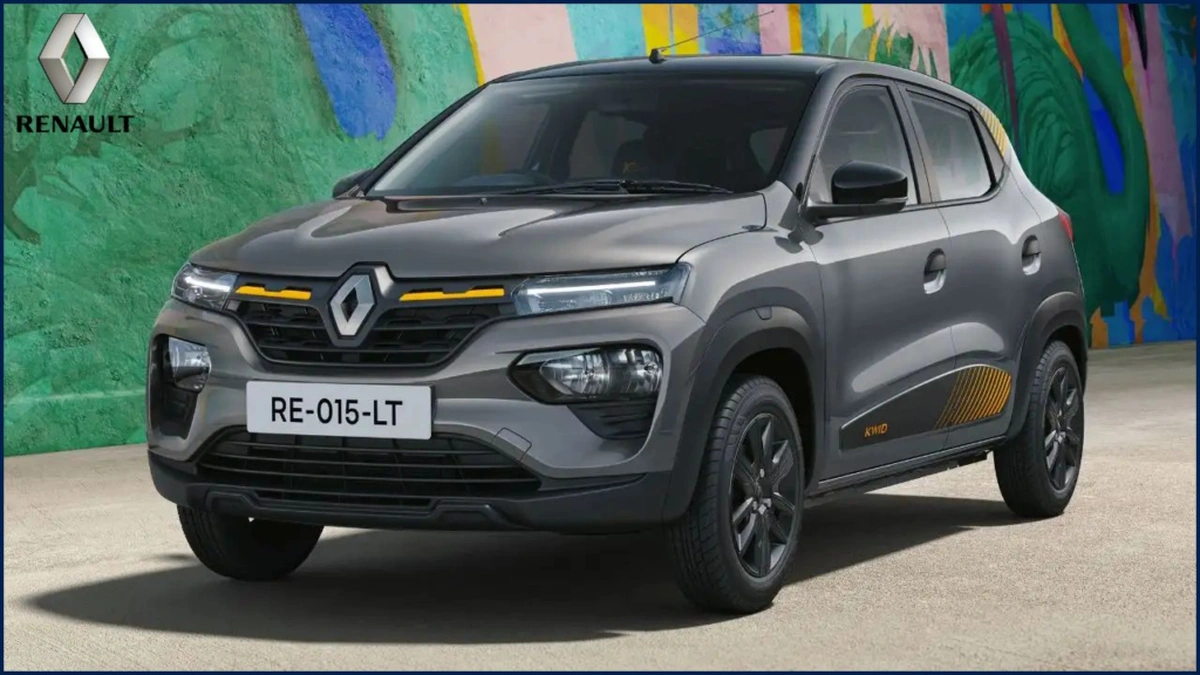
The 2025 Renault Kwid Electric is poised to make waves in India, boasting a revamped design, an enhanced driving range, and a competitive price point. Renault aims to capture a significant portion of the burgeoning entry-level EV market by combining local manufacturing, government incentives, and strategic partnerships, setting the stage for a showdown with Tata and Citroën.
The 2025 Renault Kwid Electric, a compact electric hatchback, is slated for an early 2025 release in India. It features redesigned aesthetics, a greater range, and attractive launch promotions. Renault India has stated that this model is designed to make electric vehicles accessible to budget-conscious buyers, positioning it as a major competitor in the affordable EV segment.
Table of Contents
- A Strategic Entry Into India’s Expanding EV Market
- 2025 Renault Kwid Electric Key Design and Performance Upgrades
- 2025 Renault Kwid Electric Charging Capabilities and Ownership Benefits
- Policy Support and Localisation Strategy
- Competitive Landscape: Challenging Tata and Citroën
- Infrastructure and Ecosystem Readiness
- Global Strategy and Renault’s EV Track Record
- Consumer Sentiment and Expert Views
- Future Outlook and Next Steps
- Concluding Paragraph
A Strategic Entry Into India’s Expanding EV Market
This launch represents a pivotal moment in Renault’s electric vehicle strategy for developing economies. The company announced on Friday that this model embodies their dedication to making electric mobility accessible in India through affordable pricing, innovative design, and local production.
India is rapidly becoming a leading EV market in Asia. According to the Ministry of Heavy Industries, electric passenger car sales surged by over 90% in 2023, fueled by government subsidies and growing consumer interest in eco-friendly transportation. The Kwid Electric is Renault’s first mass-market EV in India and is anticipated to be crucial to their expansion plans.
“India’s EV market is on the cusp of significant growth,” noted Ankit Mehta, a senior auto analyst at ICRA Limited. “Affordable electric cars offering a practical range and reliable service networks are likely to see a major increase in adoption over the next couple of years.”
2025 Renault Kwid Electric Key Design and Performance Upgrades
The Renault Kwid Electric showcases a noticeably updated exterior, complete with a closed-off front grille, distinctive Y-shaped LED daytime running lights, projector headlights, and a reworked bumper. This EV incorporates a centrally located charging port and enhanced aerodynamics to maximize range efficiency.
The interior of the Renault Kwid Electric offers a 10.1-inch infotainment touchscreen that supports wireless Android Auto and Apple CarPlay, along with a 7-inch digital instrument cluster. The cabin boasts improved upholstery, USB-C ports, and redesigned controls. Standard safety features are expected to include multiple airbags, ABS, ESP, hill-start assist, TPMS, and a rearview camera.
Under the hood, a 26.8 kWh battery pack powers the vehicle, paired with a 48 kW motor that generates approximately 65 bhp and 113 Nm of torque. Renault estimates the driving range to be up to 250 kilometers.
2025 Renault Kwid Electric Charging Capabilities and Ownership Benefits
The Kwid Electric supports 30 kW DC fast charging, enabling a 15–80% charge in around 40 minutes. Using a 7.4 kW wallbox, the same charge level is achieved in less than three hours, while a standard AC outlet takes up to nine hours.
To encourage early adoption, Renault is planning several initial incentives, such as discounted home charger installation, extended warranties on the battery, and favorable financing options. The company also mentioned offering priority delivery to early buyers.
Policy Support and Localisation Strategy
The model is supported by India’s Faster Adoption and Manufacturing of Hybrid and Electric Vehicles (FAME) initiative, which offers incentives to both consumers and manufacturers to promote EV adoption. Renault also plans to manufacture key components locally, including the battery pack, to reduce reliance on imports and stabilize pricing.
According to Dr. Ritu Singh, a policy researcher at the Centre for Energy and Environment Policy Research, “Localizing EV components is vital for maintaining affordable prices. Renault’s commitment to local sourcing could make the Kwid Electric eligible for additional incentives at the state level.”
Several states, including Maharashtra, Gujarat, and Delhi, provide additional subsidies and exemptions on road tax for electric vehicles. These policies could substantially decrease the on-road price of the Kwid Electric for buyers.
Competitive Landscape: Challenging Tata and Citroën
The Kwid Electric will compete in an EV market currently led by the Tata Tiago EV and Citroën eC3. It will also face competition from the MG Comet EV, which has targeted city dwellers with its compact design and advanced technology.
Analysts believe that Renault’s pricing strategy will be crucial. Estimates suggest a starting ex-showroom price of ₹7–8 lakh for the base model, potentially undercutting its competitors significantly.
Raghav Bansal, an auto sector expert at Nomura India, noted that “Given Tata’s strong initial market position, Renault will need to focus on pricing, dealer network, and reliability to attract customers.”
Infrastructure and Ecosystem Readiness
India currently has over 12,000 public charging stations; however, their distribution is uneven, with most located in urban areas. Renault is reportedly negotiating with various charging network providers to offer combined charging benefits to Kwid Electric owners.
Anjali Sharma, a spokesperson for EV Infra India, an industry consortium, stated, “EV adoption is about more than just the car; it’s about the entire charging ecosystem. Partnerships between automakers and infrastructure providers can greatly accelerate adoption rates.”
Charging network subscriptions, similar to bundled services available in European EV markets.
Global Strategy and Renault’s EV Track Record
Renault’s entry into the Indian EV market leverages its global EV expertise. The company’s Zoe was a top-selling electric car in Europe for several years, and the Dacia Spring EV serves as the foundational architecture for the Kwid Electric. Having been tested across various markets, this platform provides Renault with a strong basis for local adaptation.
Furthermore, Renault collaborates with Nissan through the Renault-Nissan Alliance, which facilitates cost-sharing and joint development. Analysts suggest this could provide Renault with a competitive advantage in scaling production and managing costs in India.
Consumer Sentiment and Expert Views
Surveys conducted by the Society of Indian Automobile Manufacturers (SIAM) reveal growing interest in EVs among middle-income consumers, especially for daily commuting. Range anxiety remains a major concern, but improvements in charging infrastructure and declining battery costs are changing perceptions.
Meera Krishnan, an EV consumer researcher at IIT Delhi, said, “Vehicles like the Kwid Electric can be transformative if they offer a good balance between affordability and trust. The brand’s reputation and after-sales service will be key.”
Future Outlook and Next Steps
While Renault has not yet announced a specific launch date, they have confirmed that pre-orders will commence in early 2025. The vehicle will be assembled locally, likely starting production at the company’s plant in Tamil Nadu. Renault has also hinted at future EV models, including compact SUVs, as part of a wider strategy for India.
Industry experts suggest that the Kwid Electric could be instrumental in popularizing EV adoption in semi-urban and rural areas, where affordability and practicality are crucial considerations.
MG Windsor EV 2025 Bumper Sale: Premium Electric SUV at Festive Offer Price!
Concluding Paragraph
The 2025 Renault Kwid Electric integrates Renault’s global expertise in electric vehicles with a strategy specifically tailored for India, focusing on affordability, local production, and a supportive ecosystem. Its success will hinge on Renault’s ability to effectively manage pricing, build consumer confidence, and navigate a competitive market. If successful, this model has the potential to significantly expand the entry-level EV segment in India and contribute to the country’s electrification objectives.
