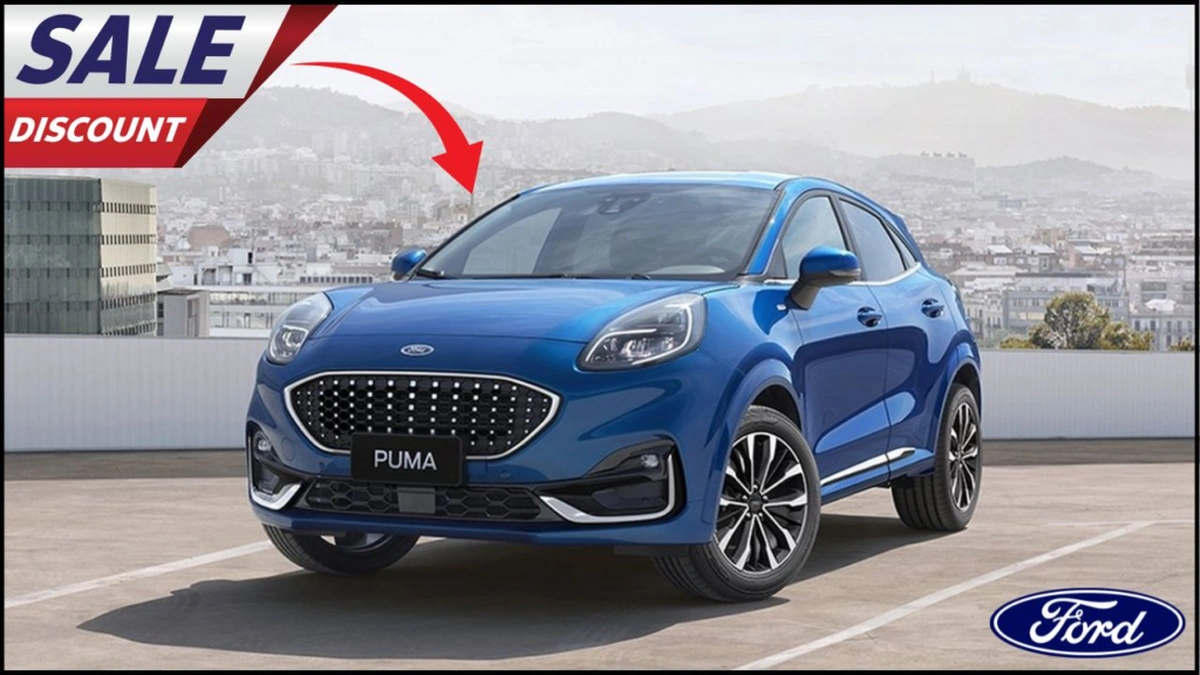
The Ford Puma 2025 launch strategy integrates EV benefits, appealing price points, and enhanced technology to solidify Ford’s position in the competitive compact SUV arena. With government grants potentially reaching £3,750 alongside home charging solutions, the launch is specifically aimed at urban electric vehicle enthusiasts throughout Europe.
Ford Motor Company has officially unveiled the Ford Puma 2025, a modernized compact SUV designed to deliver affordable electrification, contemporary aesthetics, and strategic launch promotions. By providing both discounts and government-supported EV incentives across European markets, Ford’s objective is to significantly increase its market share within the rapidly expanding urban SUV category.
The launch includes compelling incentives such as cash rebates, home charger installation assistance, and subsidized financing options, making the Puma one of Ford’s most competitively priced vehicle launches in recent memory.
Table of Contents
- Evolution of the Puma: From Coupe to Electric SUV
- Pricing, Launch Offers, and Government Incentives
- Interior and Technology: A Modern Urban SUV
- Performance and Efficiency
- Competitive Landscape: Puma vs Rivals
- Policy Context: EV Incentives and Green Mobility
- Consumer Segment: Targeting Urban Families and First-Time EV Buyers
- Outlook for the Indian Market
- Early Reactions and Future Prospects
- Conclusion: A Strategic Launch at a Critical Time
Evolution of the Puma: From Coupe to Electric SUV
The Ford Puma was originally introduced in 1997 as a sporty, compact coupe. Production ceased in 2002, but the name was revived in 2019 for a small crossover SUV, reflecting the increasing popularity of compact urban SUVs. The Puma has since become one of Ford’s top-selling models in Europe, celebrated for its blend of sporty styling, efficiency, and practical everyday use.
The 2025 model marks a significant milestone as the first fully electric Puma, demonstrating Ford’s commitment to transitioning away from internal combustion engine vehicles in Europe by the year 2030.
Pricing, Launch Offers, and Government Incentives
- Starting Price (UK): £30,000
- Launch Incentives: Potential EV grants up to £3,750
- Extras: Complimentary home charger installation and 10,000 miles worth of free charging via the Power Promise program
- Availability:
“This launch makes the Puma one of the most accessible EVs in its segment,” stated Lisa Brankin, Ford’s Managing Director for the UK and Ireland. “Our goal is to make switching to electric vehicles both practical and financially viable for our customers.”
These incentives are in line with the UK’s Plug-in Vehicle Grant, making the Puma Gen-E an appealing option for city-based EV adopters. Dealerships are also providing early adopters with special benefits such as accessory packages and reduced interest rates.
Interior and Technology: A Modern Urban SUV
Inside, the Puma 2025 boasts a 12.8-inch digital instrument panel and a 13.2-inch SYNC infotainment display. The system features wireless compatibility with Android Auto and Apple CarPlay, voice-activated controls, and the ability to receive over-the-air software updates.
Higher trim levels offer features like a panoramic sunroof, ventilated seating, a 360-degree camera, and customizable ambient lighting. Ford has also placed emphasis on enhancing noise reduction, creating a quieter and more refined cabin compared to previous iterations.
“Ford has clearly focused on improving the interior environment,” noted Ananya Bhattacharya, an automotive editor at AutoCar India. “The updated infotainment system and comfort features bring it up to par with leading competitors in the segment.”
Performance and Efficiency
The Puma Gen-E is equipped with a 72 kWh battery, providing a WLTP-rated range of up to 400 km on a single charge. DC fast-charging capabilities allow for a 10–80% charge in approximately 28 minutes when using a 150 kW charger.
The hybrid model includes Ford’s enhanced 1.0-litre EcoBoost engine paired with a 48-volt mild-hybrid system, improving fuel efficiency without compromising performance. Both models utilize regenerative braking systems to maximize energy recuperation.
According to Guidehouse Insights, Ford’s strategy to expand its electrified Puma lineup aligns with the growing importance of EV affordability as a key competitive factor in the European market.
Competitive Landscape: Puma vs Rivals
The Puma 2025 will face competition from:
- Hyundai Kona Electric – Offers a range of 418 km, starting price around £31,000
- Volkswagen T-Roc – Available only with petrol engines, starting price approximately £29,500
- Peugeot 2008 Electric – Range of 402 km, starting price around £30,800
“Ford is finding a good middle ground between price and features,” stated Dr. Priya Menon, an automotive economist at the London School of Economics. “This positions the Puma as a particularly appealing option for budget-conscious EV purchasers.”
Policy Context: EV Incentives and Green Mobility
This launch corresponds with Europe’s broader objectives for net-zero emissions. The EU intends to prohibit the sale of new gasoline and diesel vehicles by 2035, while the UK has set a 2030 deadline for the majority of internal combustion engine (ICE) vehicles.
Governments are promoting this transition through financial incentives, tax breaks, and investments in charging infrastructure. Ford’s launch offer leverages these policies to reduce the upfront cost for consumers.
“These incentives are more than just marketing tactics,” explained Jonas Becker, a policy analyst at the European Automobile Manufacturers’ Association. “They are vital for achieving our climate-related objectives.”
Consumer Segment: Targeting Urban Families and First-Time EV Buyers
Ford is clearly targeting the Puma towards urban professionals, young families, and individuals purchasing their first EV, who prioritize affordability and practicality. The Puma’s compact size, efficient powertrains, and advanced connectivity make it well-suited for European city environments.
Initial test drives by publications like Top Gear and AutoExpress emphasize responsive handling, a comfortable ride, and user-friendly digital interfaces as key advantages.
Outlook for the Indian Market
Although Ford ceased mass production in India during 2021, there is increasing speculation that the Puma Gen-E might be introduced in India through Completely Built-Up (CBU) imports sometime around late 2026.
However, high import tariffs—currently ranging from 60% to 100% on CBUs—could present a major pricing obstacle. Experts suggest that local assembly or strategic partnerships would be necessary to make the vehicle competitive in that market.
“The Indian EV market is expanding rapidly, but price remains a significant concern,” stated Raghav Sharma, an automotive industry analyst at CRISIL. “If Ford chooses to re-enter the market, a carefully adapted pricing and after-sales strategy is crucial.”
India has implemented EV incentives under the FAME-II initiative and is expanding its charging infrastructure, potentially making it a viable future market for Ford’s electric vehicle offerings.
Range Rover 2025 Launched – Ultra-Powerful SUV with 615HP & Hybrid Tech at a Jaw-Dropping Price!
Early Reactions and Future Prospects
Early media reviews and initial consumer feedback suggest strong interest in the Puma Gen-E. Reviewers have commended its design, driving experience, and reasonable pricing, while some have expressed a desire for faster charging capabilities and more extensive fast-charging network availability.
Ford intends to sell more than 80,000 Puma Gen-E units during its first year on the market, significantly contributing to the company’s overall EV sales goals in Europe.
Conclusion: A Strategic Launch at a Critical Time
The Ford Puma 2025 Launch Offer is more than just a promotional pricing initiative—it signifies Ford’s strategic advancement into affordable electrification. By combining incentives, advanced technology, and a reputable brand legacy, Ford aims to establish a solid position in the increasingly competitive compact SUV market.
If successful, the Puma could provide a framework for similar EV launches in emerging markets, including India, in the years ahead.
