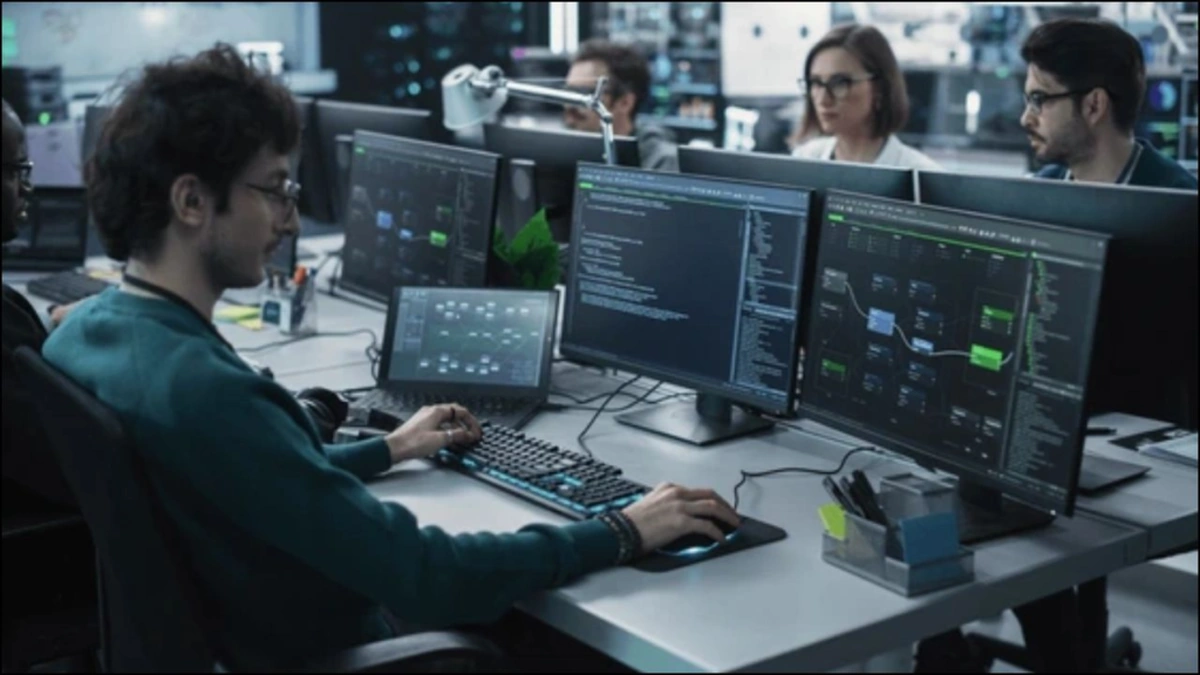
Looking forward to 2026, developers should prioritize gaining expertise in vital areas such as AI integration, cloud solutions, cybersecurity protocols, and emotional intelligence to remain competitive in an ever-transforming industry.
With the rapid evolution of the tech sector, developers must arm themselves with a combination of cutting-edge technical skills alongside essential interpersonal capabilities to stay relevant in 2026. Critical abilities, including the integration of artificial intelligence, cybersecurity measures, and emotional intelligence, will be crucial in defining the future trajectory of development careers. This article delves into the skills that developers should concentrate on to ensure job security in a dynamic digital environment.
Table of Contents
- The Rise of AI and Its Impact on Developer Skills
- Expert Insight:
- Cloud Computing and DevOps: Essential for Scalability
- Real-World Case Study:
- Cybersecurity: Protecting Applications in an Increasingly Digital World
- Expert Insight:
- Human-Centric Skills: The Role of Emotional Intelligence and Creativity
- Lifelong Learning: The Key to Staying Competitive
- Diversity and Inclusion: A New Frontier in Development
- Predictions for the Future: Beyond 2026
- Conclusion: A Holistic Approach to Future-Proofing
The Rise of AI and Its Impact on Developer Skills
The swift progression of artificial intelligence (AI) is revolutionizing numerous industries, and software development is not an exception. By 2026, AI integration into applications will become even more critical, requiring developers to possess knowledge in machine learning, natural language processing, and AI tools. According to a recent report by the International Association of Software Architects (IASA), AI-related skills are projected to be highly sought after, with organizations seeking developers proficient in AI frameworks like TensorFlow and PyTorch.
AI’s increasing role in software development is not simply about automating processes but about enhancing the intelligence capabilities of applications. Developers will need to integrate AI features, such as predictive analytics and adaptive learning, into existing systems to provide users with more customized experiences. As AI systems progress, learning how to develop and manage AI-enhanced applications will be crucial for maintaining a competitive edge in the field.
Expert Insight:
“AI is not just the future of development—it’s the present,” states Dr. Ravi Mehta, an AI researcher at the Indian Institute of Technology, Delhi. “Developers who don’t embrace AI now risk falling behind as AI becomes a standard component of application development.”
Cloud Computing and DevOps: Essential for Scalability
Cloud computing has been a major influence within the tech industry, and by 2026, it will continue to be a critical skill for developers. Expertise in cloud-native development will be required as companies increasingly adopt cloud environments to scale their businesses. Developers should focus on mastering cloud platforms such as Amazon Web Services (AWS), Microsoft Azure, and Google Cloud Platform (GCP).
Alongside cloud expertise, DevOps skills are also becoming vital. DevOps practices optimize the development and deployment process, facilitating continuous integration and faster release cycles. Tools like Docker, Kubernetes, and Terraform will be essential for automating infrastructure and ensuring applications are scalable and stable. A study by TechCrunch shows that DevOps and cloud certifications are already among the most desirable qualifications in the tech industry.
Real-World Case Study:
A prime example is Netflix, which has incorporated cloud-based technologies such as AWS into its architecture. This enables Netflix to effectively scale its operations, deliver content globally, and maintain a consistent user experience. Developers skilled in cloud computing and DevOps are essential for sustaining this infrastructure.
Cybersecurity: Protecting Applications in an Increasingly Digital World
As cybersecurity threats become more sophisticated, developers need to integrate strong security measures into their applications. In 2026, developers will not only be responsible for developing functional software but also for ensuring that these applications are secure. According to the Cybersecurity and Infrastructure Security Agency (CISA), the growing number of cyberattacks targeting businesses and individuals underscores the need for developers to adopt secure coding practices and comprehend ethical hacking principles.
Developers must stay informed about the newest cybersecurity trends, including data encryption, secure APIs, and penetration testing, to safeguard sensitive data. The increasing demand for professionals with expertise in both development and cybersecurity emphasizes the essential need to prioritize secure coding from the start of the development process.
Expert Insight:
Sushil Kumar, a cybersecurity consultant, states, “As the cyber threat landscape evolves, developers who understand the nuances of cybersecurity will not only secure their own applications but will also play a vital role in protecting the digital ecosystem.”
Human-Centric Skills: The Role of Emotional Intelligence and Creativity
Besides technical proficiency, human-centric skills will be crucial in future-proofing a developer’s career. Emotional intelligence (EQ) is one such skill that will become increasingly important. As software development teams become more collaborative, the capability to manage emotions, navigate workplace dynamics, and communicate effectively with both technical and non-technical stakeholders will be highly valued.
Dr. Anya Sharma, a leadership expert at the Indian Institute of Technology (IIT), notes that emotional intelligence encourages teamwork, leadership, and adaptability, all of which are critical as the workplace becomes more diverse and interconnected. Developers will need to be able to collaborate seamlessly across teams and cultures, making EQ an essential element of success.
Moreover, creativity will remain fundamental to software development. While AI can automate many tasks, human creativity is essential for problem-solving, especially in complex or ambiguous situations. Developers will need to think creatively to develop innovative solutions, a skill that will continue to distinguish human developers from AI-powered systems.
Lifelong Learning: The Key to Staying Competitive
The tech industry is renowned for its rapid rate of change, and by 2026, this trend will accelerate. Developers will need to embrace lifelong learning to stay ahead of technological advances. Dr. Ravi Kumar, a software engineering professor at Indian Institute of Technology, Bombay, emphasizes that continuous upskilling will be essential. “The future belongs to developers who can quickly adapt to new tools, languages, and methodologies,” he said.
To stay competitive, developers must pursue certifications in emerging technologies, participate in coding communities, and engage with cutting-edge research. Platforms like Coursera and Udemy offer a broad range of courses to help developers stay updated on trends such as blockchain, quantum computing, and augmented reality (AR).
Diversity and Inclusion: A New Frontier in Development
As the global tech industry becomes more interconnected, diversity and inclusion (D&I) in development teams are receiving increasing attention. Diverse teams are known to produce better, more innovative solutions, as they bring varied perspectives and experiences. According to a 2023 study from McKinsey, companies with diverse teams are 35% more likely to outperform their competitors.
Developers should foster inclusive environments and champion diversity. This includes advocating for gender equality, neurodiversity, and representation of underrepresented groups in tech. Fostering an inclusive culture not only benefits the team but also leads to more comprehensive, innovative software solutions.
Predictions for the Future: Beyond 2026
While 2026 is not far away, the realm of technology continues to evolve quickly. Emerging technologies like quantum computing, blockchain, and 5G are expected to bring further changes to the development landscape. Quantum computing, in particular, could transform how we address complex challenges in fields like cryptography, AI, and data analysis. Developers who monitor these trends will be well-prepared for the upcoming decade.
Moreover, as automation and autonomous systems become more prevalent, developers will need to collaborate closely with AI-driven systems to ensure smooth integration with human decision-making processes.
The Complete Guide to Preparing for Technical Interviews at TCS, Infosys, and Wipro
Conclusion: A Holistic Approach to Future-Proofing
As we approach 2026, developers must refine their technical skills and their human-centric abilities. Gaining expertise in AI integration, cloud computing, cybersecurity, and DevOps will ensure that developers remain relevant in an increasingly digital world. At the same time, emotional intelligence, creativity, and a commitment to lifelong learning will help developers maintain their edge as leaders in the field. By adopting a comprehensive approach to skill development, developers can confidently navigate the constantly changing tech environment and ensure a successful career for many years to come.
