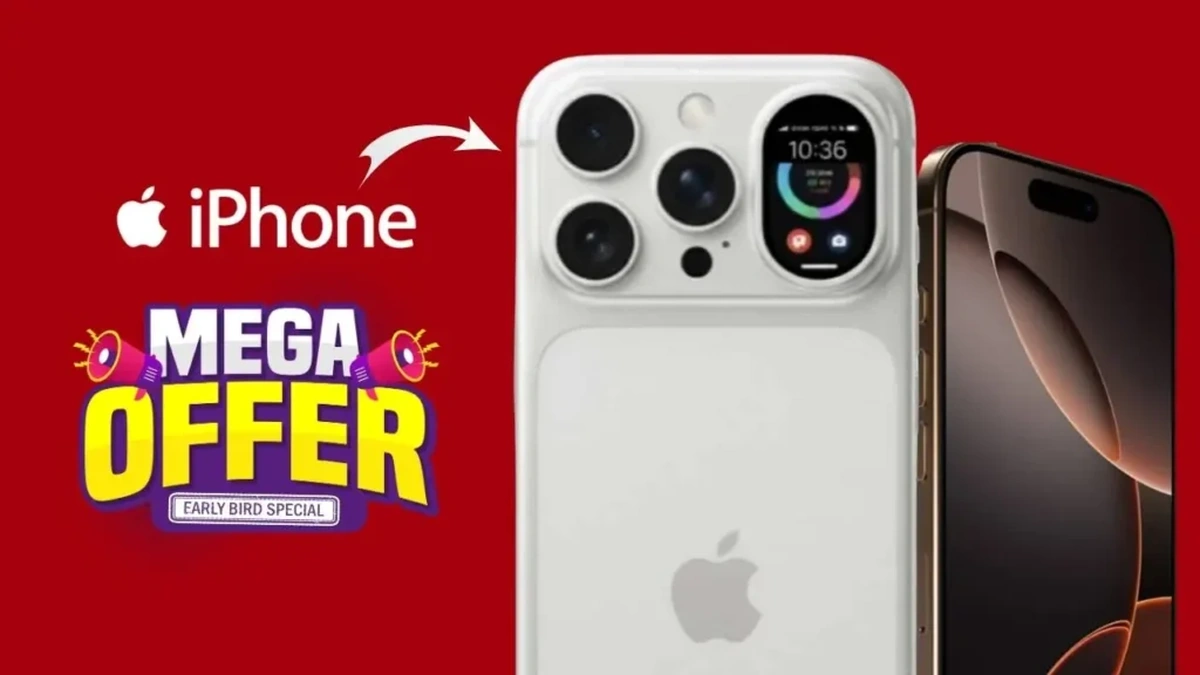
Authorities are cautioning against a deceptive iPhone 18 Pro Max promotion promising specs like a 500MP camera and 6G, which are currently unattainable. Apple hasn’t validated these claims. Experts advise consumers to scrutinize offers and report suspect ads to prevent fraud.
A wave of online advertisements promoting a “huge discount offer” on the iPhone 18 Pro Max, touting a 500MP camera, 6G capabilities, and 2TB of storage, has prompted global warnings from cybersecurity agencies. Given that Apple Inc. has made no such announcement, authorities and specialists are identifying the campaign as a potential phishing scheme aimed at financial exploitation.
Table of Contents
- Unverified Claims Raise Red Flags
- Historical Patterns of iPhone Scam Campaigns
- Apple’s Real Roadmap vs. Fake Promises
- Why 500MP and 6G Are Technically Implausible
- Anatomy of the Scam: How It Works
- Consumer Consequences
- Global Scope of Fake Apple Campaigns
- Government and Regulatory Response
- How to Protect Yourself from Fake iPhone Offers
- Consumer Education and Future Outlook
- Concluding Paragraph
Unverified Claims Raise Red Flags
The supposed iPhone 18 Pro Max has become a hot topic on messaging platforms, in spam emails, and on online shopping sites. Advertisers are claiming the device boasts an unmatched 500MP camera, 6G network compatibility, and a massive 2TB of internal memory – specs that experts deem unrealistic.
Apple’s official press releases show no mention of an iPhone 18 Pro Max announcement. Traditionally, Apple reveals new iPhone models through worldwide keynotes or official press statements, not via third-party discount deals.
“This perfectly illustrates how scammers take advantage of the buzz surrounding major tech product releases,” stated Ravi Bhatia, a cybersecurity analyst at the Indian Computer Emergency Response Team (CERT-In). “They leverage convincing branding, urgency, and bogus links to harvest user details.”
Historical Patterns of iPhone Scam Campaigns
This isn’t the first instance of Apple customers being targeted. Comparable false discount campaigns emerged before the releases of the iPhone 14 in 2022 and the iPhone 15 in 2023. Back then, fraudsters pitched early pre-orders at significant discounts, promising “exclusive access” well before the official debut.
According to a 2024 CERT-In study, nearly 27,000 grievances were logged in India alone concerning tech-related fraud, with Apple products involved in over 45% of these cases.
Apple’s Real Roadmap vs. Fake Promises
Tech analysts highlight that Apple’s subsequent major iPhone launch is projected for the latter part of 2025. Information from trusted sources like Reuters and Bloomberg hints that the focus will likely be on improved AI functions, camera system upgrades, and power-efficient processors.
Neither a 500MP camera nor 6G technology has appeared in substantiated reports. Actually, 6G mobile communication is still in the research and trial phase. The International Telecommunication Union (ITU) anticipates a commercial 6G introduction no sooner than 2030.
“These assertions are not just unlikely; they’re not feasible with today’s technologies,” said Dr. Meena Krishnan, a telecommunications specialist at the Indian Institute of Technology (IIT) Delhi. “Customers must realize that such specs are promotional ploys, not genuine capabilities.”
Why 500MP and 6G Are Technically Implausible
Contemporary high-end smartphones, including the iPhone 15 Pro Max, utilize camera sensors that range from 48 to 200MP. A 500MP sensor would necessitate sophisticated image processing and vast storage capacities that go beyond current mobile hardware.
Likewise, no telecom carrier globally presently offers 6G networks. Most are still in the process of expanding their 5G infrastructure.
Anatomy of the Scam: How It Works
Cybersecurity experts report that the deceptive iPhone 18 Pro Max offer uses a number of coordinated methods:
- Counterfeit landing pages that resemble Apple’s official site.
- Phishing messages and SMS messages pushing urgent action.
- Illegitimate payment gateways collecting bank card details.
- Dishonest “pre-order” drives via social media.
Once individuals input their private or bank details, it’s often sold to criminal rings or exploited for identity theft.
Consumer Consequences
In prior fraud cases linked to Apple devices, victims typically lost between ₹15,000 and ₹2 lakh. Beyond the loss of funds, personal details — including Aadhaar, PAN, and bank login details — were regularly exposed.
“I spent ₹39,000 on what I assumed was an early iPhone offer,” recalled Neha Sinha, a victim of a fake iPhone 15 offer in 2023. “The website vanished two days later, and my bank identified suspicious transactions.”
Global Scope of Fake Apple Campaigns
Scams involving Apple products represent a global problem. Information from the Federal Trade Commission (FTC) in the U.S. and Europol reveals linked networks working across Asia, Europe, and North America. These groups regularly employ sophisticated branding and multilingual tactics.
The European Union Agency for Cybersecurity (ENISA) reported a 48% increase in Apple-themed phishing incidents from 2023 to 2025, usually coinciding with real or anticipated product announcements.
“The prominence of the Apple brand is an appealing target for scammers,” observed James Porter, a senior analyst at ENISA. “As soon as rumors circulate, fraudulent websites multiply.”
Government and Regulatory Response
The Ministry of Electronics and Information Technology (MeitY) has urged individuals to exercise caution. CERT-In has sent guidelines to internet providers and online platforms to detect and delete fake listings.
E-commerce corporations are also being pressured to enforce more stringent listing verification processes.
“We are working closely with leading marketplaces and telecom providers to take down fraud operations,” said Ananya Menon, representing MeitY. “Public education remains the most effective measure.”
How to Protect Yourself from Fake iPhone Offers
Experts suggest a five-step verification procedure to aid individuals in avoiding these scams:
- Confirm the source: Apple announces its products only through its official website or authenticated events.
- Check URLs carefully: Avoid URLs with typos or unusual domain names.
- Never prepay: Apple doesn’t offer early orders via third-party vendors.
- Use safe payment options: Never share your card or bank details via unverified links.
- Report doubtful activity: File concerns via CERT-In, MeitY portals, or local cybercrime divisions.
Moreover, enabling multi-factor authentication and using browser security plugins can help reduce exposure to phishing sites.
Consumer Education and Future Outlook
Cybersecurity analysts believe these scams will further advance as artificial intelligence generates increasingly convincing fake websites, audio, and photos. They advise that detecting fraudulent product marketing may become harder in the coming years.
“The next generation of cons won’t only imitate trademarks — they’ll replicate complete support interactions,” added Dr. Krishnan from IIT Delhi.
Simultaneously, Apple’s genuine product plans will likely be announced later in 2025, with verified specs and official vendor channels. Consumers are encouraged to track official Apple news rather than speculative “leaks” on untrustworthy sites.
OnePlus 13 2025 6G Smartphone with 24GB RAM: Bumper Sale and Massive Discounts!
Concluding Paragraph
The circulating offer online is a fraud, preying on public enthusiasm for and faith in Apple. The assertions of a 500MP camera, 6G internet, and discounted pricing are misleading. Regulators, tech vendors, and cybersecurity professionals are trying to eliminate such scams — but knowledgeable individuals remain the strongest defense.
