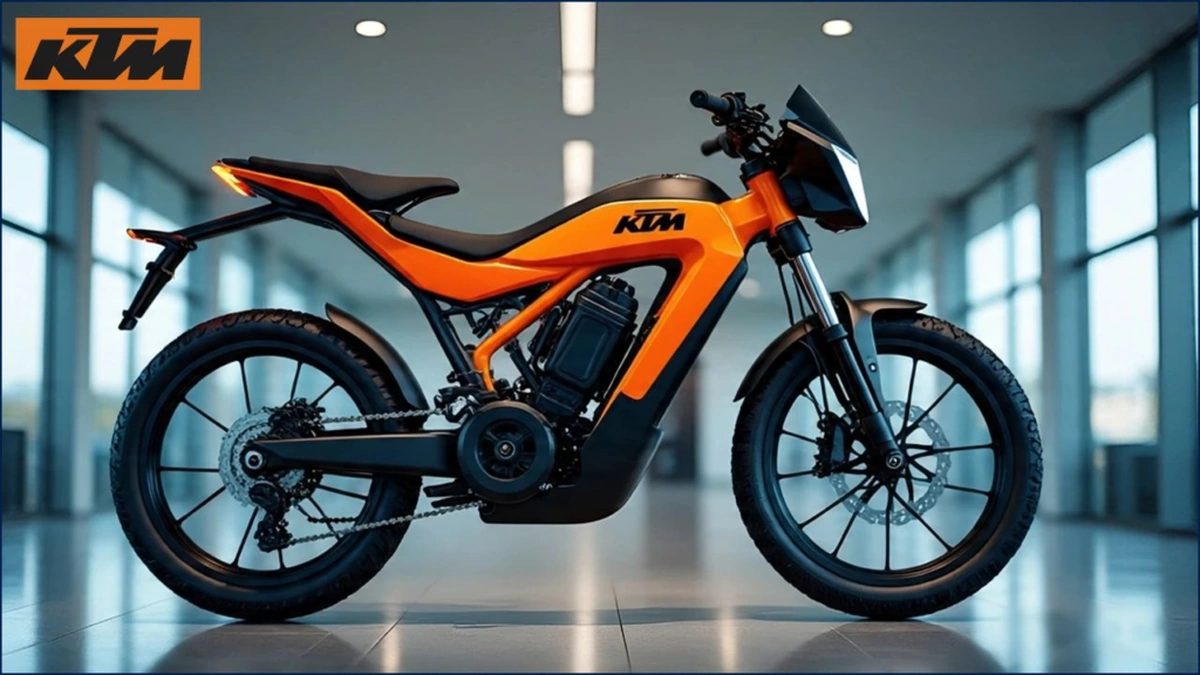
The internet is buzzing about a purported KTM Electric Cycle boasting a 220 km range and rapid charging, all for the incredibly low price of ₹1,499. This claim has sparked considerable interest among the public. However, cybersecurity professionals and industry analysts are sounding the alarm, suggesting this offer is likely a scam. KTM has not officially announced any such product launch.
A widespread online claim regarding a KTM Electric Cycle, promising a 220-kilometer range and rapid charging capabilities for a mere ₹1,499, has generated both significant public excitement and expert skepticism. As of Friday, there has been no official confirmation from KTM India, casting serious doubts on the legitimacy of this enticing offer.
Table of Contents
- KTM Electric Cycle: A Viral Claim With Limited Verification
- No Official Product Matches the Claim
- How the Rumour Spread Online
- Regulatory Context: Why Real Launches Follow Strict Rules
- Price and Technology: Why ₹1,499 is Unrealistic
- Market Comparison: What Real Low-Cost E-Bikes Offer
- Consumer Impact: Stories from the Ground
- Cybersecurity Tips: How to Spot Scam Offers
- India’s EV Market in Global Context
- What Happens Next
- Conclusion
KTM Electric Cycle: A Viral Claim With Limited Verification
The buzz surrounding the KTM Electric Cycle began gaining traction on various social media platforms earlier this week. Posts promoting this “dhamaka offer” highlight exceptional performance at an astonishingly low cost, claiming the e-bike can travel 220 km on a single charge and is available for purchase at just ₹1,499 for a limited time.
Notably, these online promotions lack crucial details such as official dealership information, specific model names, and manufacturing specifications. Reputable automotive and technology news sources have not corroborated these claims, and KTM India has not released any official statements regarding this alleged offer.
When contacted, a KTM India customer service representative clarified, “The company currently does not offer any electric bicycle model in the Indian market.”
No Official Product Matches the Claim
A review of KTM’s official website reveals a selection of electric bicycles available in their global lineup, including the Macina Ride and Macina Kapoho series. In international markets, these models are priced between ₹1.7 lakh and ₹4.4 lakh, with ranges between 80 km and 180 km per charge. This is significantly less than the 220 km figure advertised online, and at prices considerably higher than ₹1,499.
How the Rumour Spread Online
The improbable offer appears to have originated from several unverified websites that are using KTM’s branding and marketing materials without authorization. These sites have been running sponsored advertisements on platforms like Facebook, Instagram, and YouTube, prompting users to “book now” by submitting a small payment.
According to analysts at the CyberPeace Foundation, a prominent cybersecurity think tank, there are at least three deceptive domains designed to closely resemble official KTM websites. Raksha Mehta, Senior Analyst at the foundation, stated, “These sites employ persuasive branding, countdown timers, and fabricated testimonials to create a sense of urgency and deceive unsuspecting users.”
Regulatory Context: Why Real Launches Follow Strict Rules
Under India’s existing electric mobility regulations, any company introducing an electric cycle or e-bike must adhere to Bureau of Indian Standards (BIS) certification protocols. They must also secure type approval and, where subsidies are applicable, register under the Faster Adoption and Manufacturing of Electric Vehicles (FAME-II) initiative.
The Ministry of Heavy Industries has indicated that no KTM model has been registered or approved under these frameworks. Typically, regulatory filings for new models are publicly accessible several weeks ahead of any launch, especially for major brands.
“An offer like this would necessitate not only a new model registration but also substantial disclosure in compliance with EV safety standards,” explained Dr. R.K. Singh, a senior official at the Bureau of Indian Standards. “The absence of any such documentation strongly suggests that this offer is not legitimate.”
Price and Technology: Why ₹1,499 is Unrealistic
Industry insiders point out that the production cost of an electric bicycle capable of achieving a 220 km range is significantly higher than the advertised price. Experts from the Bureau of Energy Efficiency (BEE) estimate that the battery pack alone would likely cost upwards of ₹25,000.
“Even with substantial subsidies and cost-effective manufacturing strategies, no company could realistically offer a 220 km e-bike at such a low price,” noted Dr. Anil Verma, a Senior Researcher at the Indian Institute of Technology (IIT) Delhi’s Centre for Electric Mobility. “These claims defy basic economic and engineering principles.”
Market Comparison: What Real Low-Cost E-Bikes Offer
Currently, entry-level e-bikes and electric cycles available in India, including models from brands like Hero Lectro, EMotorad, and Nexzu Mobility, typically start at around ₹25,000. These models generally offer ranges between 25 km and 60 km. More premium models, featuring extended ranges and enhanced performance, can reach prices up to ₹1 lakh.
The gap between these market prices and the reported KTM offer is very large.
Consumer Impact: Stories from the Ground
Ravi Kumar, an IT professional from Pune, recounted his experience after seeing one of the advertisements on Instagram. “It seemed genuine. The website used the KTM logo and even displayed customer reviews,” he said. “I was about to make the booking payment, but I decided to contact a local KTM dealer first. That’s when I discovered it was a scam.”
Priya Menon, a student from Bengaluru, reported the advertisement to cybercrime authorities after receiving several suspicious payment requests.
These accounts highlight how fraudsters are taking advantage of the increasing interest in EVs in India to victimize consumers.
Cybersecurity Tips: How to Spot Scam Offers
Experts recommend the following steps to help people to verify the offers found online:
- Check the official company website and list of authorized dealers.
- Pay close attention to the URL — fake websites often include extra characters or utilize unusual domain names.
- Avoid offers that demand immediate payments or booking fees.
- Confirm if the company is registered with BIS or FAME-II.
- Report any questionable links to the National Cyber Crime Reporting Portal.
India’s EV Market in Global Context
India stands out as one of the fastest-growing electric mobility markets worldwide. According to the Society of Manufacturers of Electric Vehicles (SMEV), sales of electric vehicles in India reached over 1.7 million units in 2023–24, including both two-wheelers and e-cycles.
Globally, the adoption of e-bikes has risen sharply in Europe, where KTM has a notable presence. Nevertheless, even in these markets, there are no e-bikes with a 220 km range available at such a low price.
“Scams like this demonstrate both significant consumer demand and a lack of digital awareness concerning EV technology,” said Amit Khatri, an EV industry analyst at PwC India.
What Happens Next
Consumer advocacy groups are advocating for greater oversight of online advertisements concerning electric vehicles. The Advertising Standards Council of India (ASCI) has issued a statement that it is actively “monitoring these deceptive advertisements” and will issue notices to platforms hosting misleading content.
Meanwhile, law enforcement agencies are encouraging the public to exercise caution and immediately report any suspicious schemes.
Supertech Expands MAXX Autos and Zapster Scooters: Launch Discounts and Savings Announced
Conclusion
The viral KTM Electric Cycle offer has highlighted a concerning disparity between consumer interest and scam awareness within India’s rapidly expanding EV sector. No credible information backs up the claim of a ₹1,499 long-range electric bicycle, and experts widely agree that it is almost certainly a scam.
The lesson is clear for consumers:
