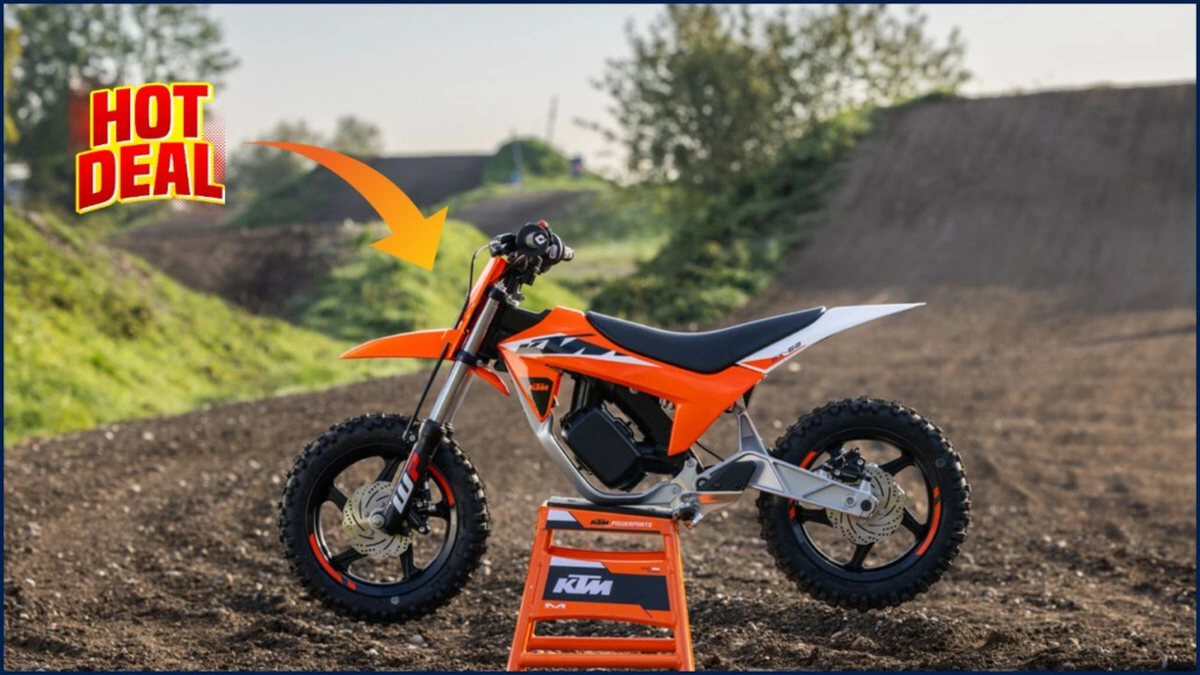
A widely circulated advertisement promoting a KTM electric cycle for children, boasting a 128 km range and a top speed of 55 km/h for only ₹4,000, has raised concerns and is likely a scam. KTM has distanced itself from this offer, and experts as well as authorities are advising consumers to thoroughly verify sellers and exercise caution before making any purchases.
A viral advertisement for a KTM electric cycle for kids
Table of Contents
- A Deal Too Good to Be True
- Industry Growth Makes Market Ripe for Scams
- KTM Issues Strong Denial
- The Technical Impossibility Behind the Claim
- Cybercrime Surge Tied to Fake Brand Promotions
- Past Cases Highlight Repeating Pattern
- Consumer Protection Measures and Legal Recourse
- The Psychology Behind Falling for Unrealistic Deals
- Safety and Regulatory Oversight
- Expert Tips: How to Stay Safe Online
- 1. Buy Only from Authorised Channels
- 2. Research Before Paying
- 3. Use Secure Payment Methods
- 4. Document Everything
- Conclusion
A Deal Too Good to Be True
The purported KTM Electric Cycle, advertised across various obscure online retail platforms, makes the extraordinary claim of offering a KTM Electric Cycle for Kids with performance capabilities typically found in adult e-bikes. The advertisement highlights an impressive 128 km range, a blazing 55 km/h top speed, and an unheard-of eight-year battery warranty, all for the incredibly low price of just ₹4,000.
These claims directly contradict KTM’s official product specifications, which do not list any model with similar performance characteristics. KTM’s genuine electric balance bikes are specifically engineered for young riders, with maximum speeds intentionally limited to below 20 km/h for safety and prices starting from ₹70,000.
“The performance figures advertised at that price are not only improbable but also financially unsustainable,” stated Rajesh Bhatia, a seasoned Senior Analyst at the Society of Indian Automobile Manufacturers (SIAM).
Industry Growth Makes Market Ripe for Scams
The Indian e-bike market is experiencing considerable growth, propelled by increasing urbanization, rising fuel expenses, and a growing emphasis on environmentally friendly transportation options. A report by ICRA Limited indicates that the electric bicycle and two-wheeler sector in India experienced a substantial 42% year-on-year expansion in FY 2024, with children’s e-bikes representing a small but rapidly expanding segment.
This rapid growth has unfortunately created a breeding ground for fraudulent activities. “Scammers are leveraging well-known brands and the price sensitivity of consumers,” explained Meenakshi Sharma, Consumer Insights Head at Motility Research Group. “They are impersonating trusted brands like KTM to attract unsuspecting customers.”
KTM Issues Strong Denial
In an official statement released to the media, KTM India unequivocally stated that they have not launched any promotional campaign or introduced any product that aligns with the features described in the viral offer.
“KTM strongly advises customers to make purchases exclusively through authorized dealerships or official online channels,” a company spokesperson emphasized. “We have no association with these listings, and they should be regarded as fraudulent.”
The company further stated that they are actively collaborating with legal authorities to address the unauthorized use of their brand name and logos.
The Technical Impossibility Behind the Claim
The claimed 128 km range at such a low price point is simply not technically achievable. Battery technology experts estimate that a children’s e-bike capable of such a range would necessitate a lithium-ion battery pack with a capacity of at least 1.2 kWh, which alone would cost over ₹10,000 in the Indian market.
“At a price of ₹4,000, the battery cost alone would surpass the entire cost of the alleged bike,” explained Dr. Ramesh Krishnan, a distinguished battery engineer at the Indian Institute of Technology (IIT) Madras. “The advertised specifications are simply unrealistic.”
Moreover, for safety considerations, the Central Motor Vehicles Rules (CMVR) impose restrictions on the top speed of vehicles designed for children, typically limiting it to approximately 20 km/h. Any e-bike capable of reaching 55 km/h would be subject to motor vehicle regulations, requiring registration and mandatory safety certification.
Cybercrime Surge Tied to Fake Brand Promotions
The Indian Cyber Crime Coordination Centre (I4C) has reported that online shopping fraud accounted for a staggering 38% of all cybercrime cases in 2024, a significant increase from 26% in 2021. A substantial number of these cases involve fraudulent flash sales that exploit well-known brands, temporary websites, and deceptive social media advertisements.
“Scammers create a sense of urgency and scarcity to pressure individuals into making quick payments,” explained Dr. Aarti Mehra, a seasoned cybersecurity expert at the National Law University Delhi. “Once payment is processed, the fraudulent website often vanishes.”
Victims may receive counterfeit goods or, in many instances, receive nothing at all.
Past Cases Highlight Repeating Pattern
In a previous incident, a similar fraudulent offer falsely using the Hero Electric brand name successfully deceived thousands of buyers. Consumer affairs officials confirmed that over 3,000 complaints were lodged, but the majority of victims were unable to recover their funds due to the use of international payment gateways and fabricated seller identities.
This incident mirrors the current KTM scam pattern: enticing viral advertisements, unrealistic specifications, limited-time pricing tactics, and the absence of traceable customer support channels.
Consumer Protection Measures and Legal Recourse
The Department of Consumer Affairs (DoCA) advises consumers to carefully examine the following:
- Verify that websites use HTTPS protocol
- Check for seller registration details
- Ensure that real-world addresses and contact numbers are provided
- Look for payment gateway security indicators
Victims of fraudulent activity can file complaints through the National Consumer Helpline (NCH) or the Cyber Crime Portal (cybercrime.gov.in). Under India’s Consumer Protection (E-Commerce) Rules, 2020, e-commerce platforms are legally obligated to remove fraudulent sellers upon notification.
“E-commerce platforms bear a legal responsibility to take action,” stated Anil Kumar, Deputy Commissioner at DoCA. “Consumers also play a crucial role in carefully evaluating deals before making payments.”
The Psychology Behind Falling for Unrealistic Deals
Experts suggest that consumers’ price sensitivity and reliance on brand trust contribute to the effectiveness of such scams.
“A KTM-branded electric cycle offered at a 90% discount can create a powerful cognitive bias,” explained Dr. Ritu Sinha, a behavioural economist at Jawaharlal Nehru University. “Individuals may suppress their skepticism because the offer appears too good to pass up.”
Marketers and scammers often employ psychological triggers, such as countdown timers or claims of limited availability, to encourage impulsive decision-making.
Safety and Regulatory Oversight
India’s Ministry of Road Transport and Highways (MoRTH) has made it clear that any two-wheeled vehicle capable of exceeding 25 km/h must undergo homologation, safety testing, and secure mandatory insurance coverage. A children’s bike capable of 55 km/h would be subject to the same certification requirements as a motorcycle, rendering the viral offer even more improbable.
The Bureau of Indian Standards (BIS) also regulates the quality and safety of lithium-ion batteries sold in India. Substandard or unverified battery packs can pose significant fire hazards and safety risks.
Expert Tips: How to Stay Safe Online
1. Buy Only from Authorised Channels
Official brand websites or certified retail partners provide buyer protection and warranty support.
2. Research Before Paying
Thoroughly verify specifications and pricing on reputable sources. Unrealistic offers should raise red flags.
3. Use Secure Payment Methods
Credit cards and authorized UPI applications offer enhanced refund options and fraud dispute mechanisms.
4. Document Everything
Preserve screenshots, receipts, and website URLs as evidence in case you need to file a formal complaint.
Conclusion
The promoted KTM Electric Cycle for Kids is almost certainly not legitimate. This scenario sheds light on both the potential benefits and the inherent risks associated with India’s rapidly growing e-commerce environment—where innovation and fraudulent schemes increasingly coexist.
With heightened consumer awareness, vigilant regulatory oversight, and responsible conduct from e-commerce platforms, such scams can be effectively mitigated. Until then, exercising vigilance remains the most effective safeguard against fraud.
2025 Honda City Amaze with 1498cc Engine and 33 km/l Mileage: ₹1 Lakh Down Payment Offer
