Table of Contents
- Surge in Production and Dispatches
- Exports Show Momentum as Mahindra Targets New Markets
- Festive Season Demand Could Boost Domestic Sales
- Market Context: India’s Accelerating EV Transition
- Challenges: Supply Chain, Charging Infrastructure, and Policy Shifts
- Outlook: Sustained Growth with Strategic Caution
Surge in Production and Dispatches
The company witnessed an increase in exports, reaching 210 units – marking the strongest monthly performance since they began shipping overseas. Experts believe that this reflects Mahindra’s measured approach to establish their EV presence in select international markets.
Exports Show Momentum as Mahindra Targets New Markets
Industry experts have pointed out that Mahindra is adopting a gradual export strategy, which allows them to effectively manage supply chains and adhere to varying regulatory standards in different countries.
“While EV exports are still relatively small compared to the company’s internal combustion engine (ICE) vehicle sales, their positive trend is undeniable,” stated Ananya Sinha, a senior researcher at the Centre for Automotive Futures. “This growth demonstrates Mahindra’s confidence in its EV technology and its readiness to compete globally.”
Festive Season Demand Could Boost Domestic Sales
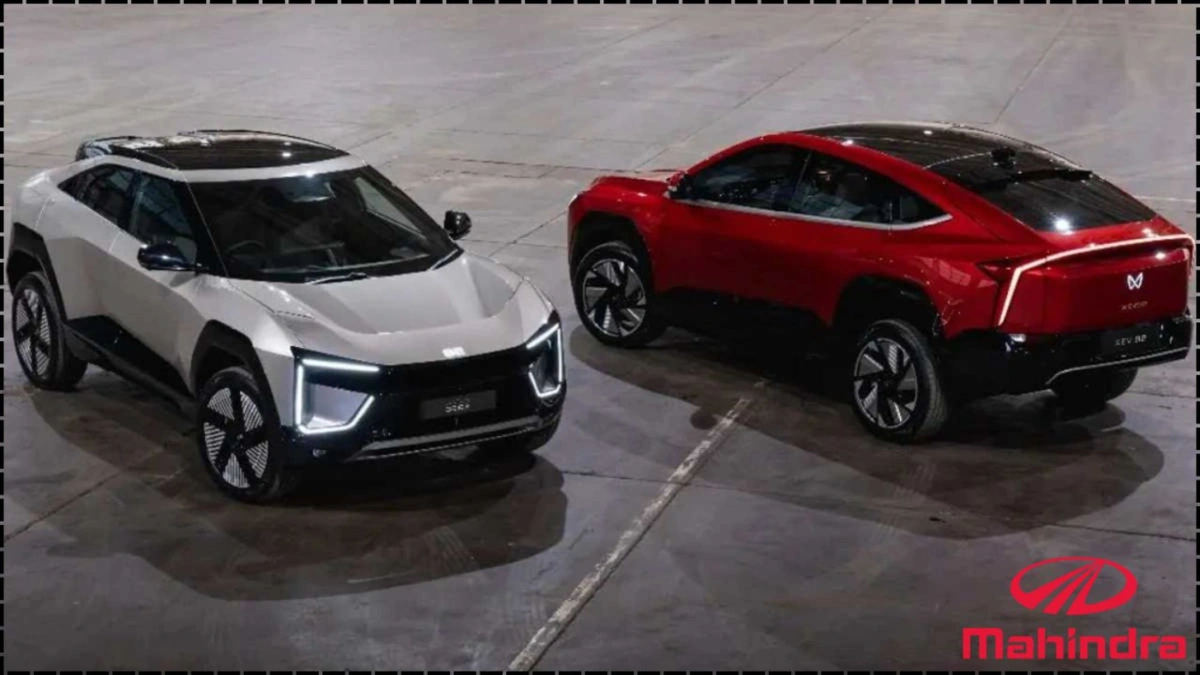
Mahindra is anticipated to introduce attractive customer incentives, such as complimentary accessories, extended warranties, and adaptable financing options for both the BE 6 and XEV 9e models. Industry sources suggest that these initiatives could significantly aid the company in securing a larger portion of the expanding EV market in India.
Throughout the first nine months of 2025, Mahindra successfully sold over 22,800 electric SUVs, representing a substantial 339 percent increase compared to the previous year. The BE 6 and XEV 9e models currently account for around six percent of Mahindra’s total SUV sales, a figure that is predicted to increase during the upcoming festive season.
Market Context: India’s Accelerating EV Transition
The Indian EV market is rapidly growing, driven by government support through initiatives like the Faster Adoption and Manufacturing of Hybrid and Electric Vehicles (FAME) scheme, along with subsidies offered at the state level. Electric vehicle penetration in the passenger vehicle sector has risen to almost seven percent by mid-2025, up from 2.5 percent just two years prior, as reported by the Society of Indian Automobile Manufacturers (SIAM).
Mahindra faces competition from companies such as Tata Motors, Hyundai, and MG Motor India within the electric SUV segment. Analysts predict heightened competition later in 2025, as new models and pricing strategies are introduced.
“The approaching festive season will be a crucial indicator of the depth of EV demand beyond the initial wave of adopters,” noted Dr. R. Krishnan, a professor of automotive economics at the Indian Institute of Management Bangalore. “The most successful companies will be those that can effectively balance pricing, infrastructure partnerships, and consumer trust.”
Challenges: Supply Chain, Charging Infrastructure, and Policy Shifts
Despite experiencing significant growth, Mahindra faces challenges common to the Indian EV industry. These challenges include supply chain limitations for crucial components like batteries and semiconductors, uneven availability of charging infrastructure in areas outside major urban centers, and potential impacts from policy changes on government incentives.
The company has announced plans to increase local battery production and expand partnerships focused on fast-charging infrastructure to address these challenges.
Outlook: Sustained Growth with Strategic Caution
Market analysts forecast that Mahindra’s EV sales could potentially increase by 40 to 50 percent year-on-year, assuming stable production levels and continued demand throughout the festive season. Export growth is also anticipated to accelerate as more international certifications are obtained in 2026.
However, increasing competition and gaps in infrastructure could influence the extent to which Mahindra can maintain this positive momentum.
“The BE 6 and XEV 9e are in a strong position, but Mahindra must implement disciplined scaling strategies to safeguard profit margins and product quality,” Menon emphasized.
