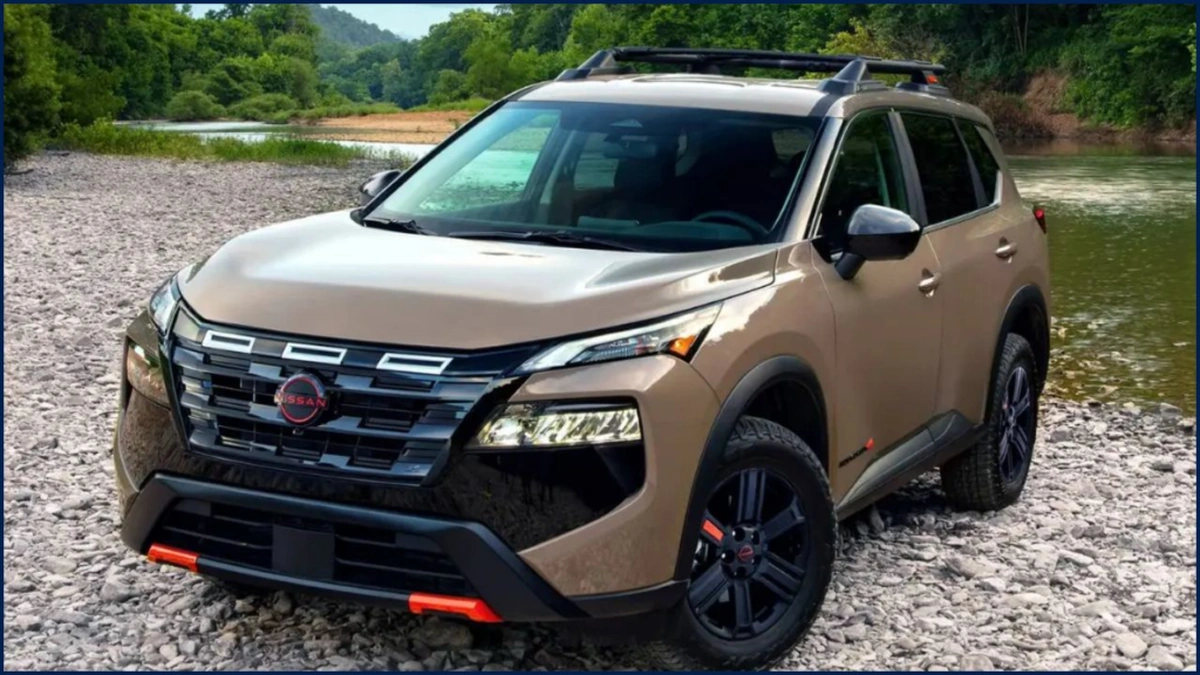
Nissan has reduced the initial cost of the 2025 Nissan Rogue to $28,590, strategically positioning the SUV in a market experiencing a slowdown. Experts suggest that this adjustment indicates broader pricing pressures and evolving consumer behaviors, with potential impacts worldwide.
Nissan has significantly lowered the price of the 2025 Nissan Rogue, signaling a deliberate effort to maintain its market share in the highly competitive mid-size SUV category. These price reductions coincide with automakers facing decreased consumer demand, increased borrowing expenses, and growing competition from both traditional car companies and electric vehicle manufacturers.
Table of Contents
- Price Cuts Across the Rogue Line-Up
- A Decade of the Rogue: From Steady Seller to Strategic Asset
- Competitive Pressure and Strategic Positioning
- Consumer Trends: Changing Preferences and High Borrowing Costs
- Performance and Design Features
- Electrification and Future Plans
- Implications for Global Markets and India
- How Buyers Can Evaluate “Discounted” Rogue Deals
- The Bigger Picture: Automakers Adjust to Economic Realities
Price Cuts Across the Rogue Line-Up
According to the official announcement, Nissan Motor Co. has set the starting price for the 2025 Nissan Rogue at $28,590.
This represents a considerable change from the previous starting price of around $30,000. The Rock Creek model sees the largest decrease at $1,930, while the prices of other trims have been reduced by amounts ranging from $1,000 to $1,800.
“This action is aimed at maintaining competitiveness and ensuring the Rogue continues to offer compelling value,” stated Jérémie Papin, Chairperson of Nissan Americas.
A Decade of the Rogue: From Steady Seller to Strategic Asset
For more than a decade, the Nissan Rogue has been among Nissan’s best-selling vehicles in North America. Since its introduction in 2007, the Rogue has consistently climbed in sales, becoming the third most popular SUV in the U.S. in 2023, only surpassed by the Toyota RAV4 and Honda CR-V.
The 2025 model signifies the latest version of Nissan’s celebrated SUV, which has transitioned from a modest compact crossover to a key component of its North American lineup. Lowering its price could help maintain its sales performance in a softening market.
Competitive Pressure and Strategic Positioning
The mid-size SUV market has become increasingly saturated. Nissan’s primary rivals, including the Toyota RAV4, Honda CR-V, Hyundai Tucson, and Kia Sportage, have maintained strong market positions despite economic challenges.
According to Cox Automotive, the Rogue’s revised price positions it as one of the most affordable mainstream SUVs in its segment, increasing its attractiveness to budget-conscious families.
“This is a competitive maneuver targeting price-sensitive buyers,” noted Michael Stanton, president of the Alliance for Automotive Innovation. “Nissan is demonstrating its intent to maintain its position.”
Consumer Trends: Changing Preferences and High Borrowing Costs
Demand for SUVs remains strong, but growth has slowed. U.S. SUV sales increased by only 1.4% in the third quarter of 2025, compared to a 6% increase in the previous year.
Increased loan interest rates have also deterred some buyers. The Federal Reserve Bank of St. Louis reports that average auto loan rates in the U.S. reached 8.2% in Q3 2025, the highest level in over two decades.
“Consumers are now exhibiting greater caution,” explained Dr. Priya Menon, an automotive economist at the University of Michigan. “Nissan’s pricing strategy is aimed at making the Rogue more accessible despite elevated financing costs.”
Performance and Design Features
The 2025 Nissan Rogue retains the updated design first seen in 2024, which includes sharper headlights, a more prominent grille, and enhanced driver-assistance technology. It features a 1.5-liter turbocharged engine that delivers 201 horsepower, coupled with a continuously variable transmission (CVT).
Fuel efficiency remains a key advantage. The U.S. Environmental Protection Agency (EPA) estimates that the Rogue achieves 33 miles per gallon (mpg) in combined driving, giving it an edge over several competitors in terms of fuel economy.
“The Rogue’s combination of design, practicality, and efficiency makes it well-suited for its price range,” observed Samantha Lee, a senior analyst at Edmunds.
Electrification and Future Plans
While the current Rogue relies on a petrol-powered engine, Nissan is accelerating its transition towards electric vehicles. The company has publicly committed to introducing 19 new EV models globally by 2030, including hybrid and plug-in hybrid versions of its most popular vehicles.
Industry analysts suggest that a hybrid variant of the Rogue could be launched by late 2026 to directly compete with the Toyota RAV4 Hybrid and Honda CR-V Hybrid.
“A hybrid Rogue is almost certain,” stated Kenji Takada, a senior automotive analyst at Nikkei Asia. “Price reductions on the gasoline-powered version help prepare for that transition.”
Implications for Global Markets and India
Although the Rogue is primarily sold in North America, its pricing strategy has worldwide consequences. According to analysts, Nissan might consider importing or assembling the vehicle in India as part of its larger Asia strategy.
However, high import tariffs remain an obstacle. India currently imposes import duties exceeding 100% on completely built units (CBUs), which would significantly increase the final price above ₹50 lakh, limiting its market appeal.
“For India, localization would be critical if Nissan hopes to position the Rogue competitively,” commented Raghav Nair, an automotive analyst at Nomura India.
This occurs at a time when India’s mid-size SUV market is expanding quickly, with models such as the Hyundai Tucson and Toyota Hyryder leading the way.
How Buyers Can Evaluate “Discounted” Rogue Deals
Experts recommend that consumers approach the current “discount wave” with caution.
Three essential steps are advised before making a purchase:
- Verify mileage and condition
- Check warranty transferability – Make sure the vehicle’s original factory warranty remains valid.
- Compare financing options
“A reduced price does not automatically equate to a better deal,” cautioned Laura Mendoza, a senior editor at Kelley Blue Book. “Thorough research is crucial.”
The Bigger Picture: Automakers Adjust to Economic Realities
The Nissan Rogue price cut highlights a broader trend: automakers are adjusting their pricing strategies as consumers become more cautious with their spending.
Some experts believe that this signals greater price competition within the mid-size SUV segment over the next year. Nissan’s aggressive pricing could prompt competitors to respond with their own incentives and financing deals.
, auto industry correspondent at the Financial Times. “This is good for buyers but places strain on manufacturers’ profits.”
