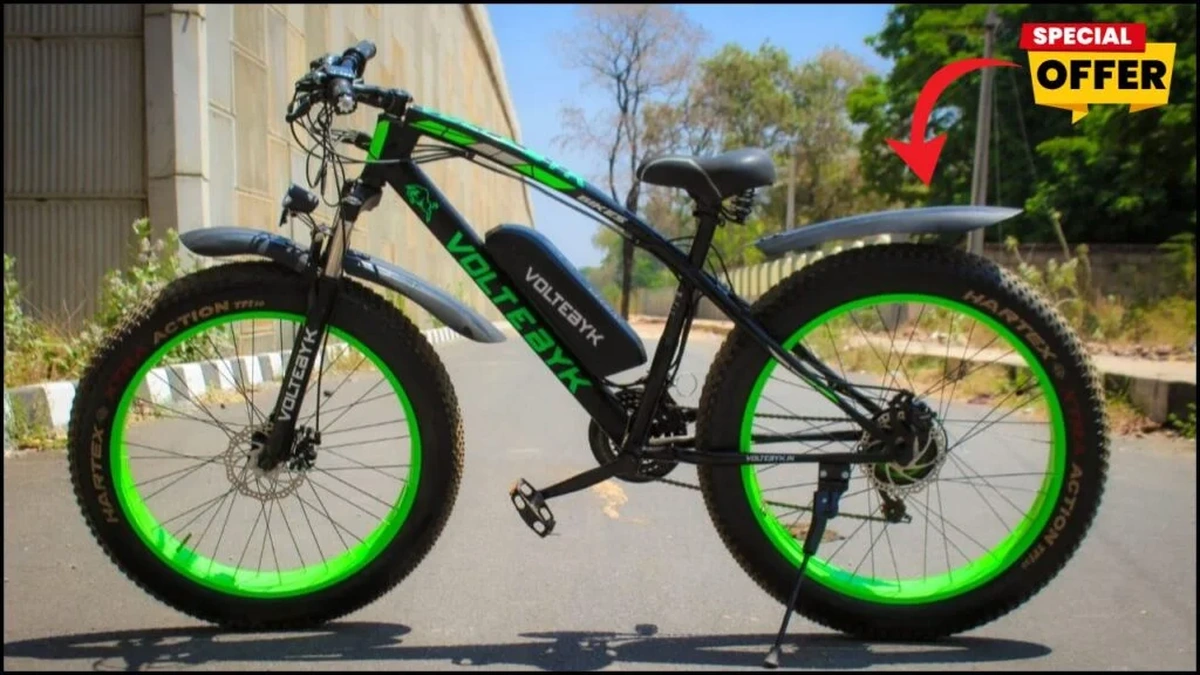
A widespread offer advertising the Runner Pro Electric Cycle for a mere ₹5,000 has sparked widespread concern. Authorities and industry specialists are cautioning that the promotion is most likely a fraudulent scheme, encouraging potential buyers to diligently confirm the validity of sellers and product documentation to prevent being swindled.
A sensational claim promoting the Runner Pro Electric Cycle has emerged, promising an unbelievable bargain.
Table of Contents
- The Unusual Offer That Captured National Attention
- What a Real Runner Pro Electric Cycle Actually Offers
- Regulatory and Consumer Protection Landscape
- Scam Pattern Mirrors Previous Fake EV Offers
- How Consumers Can Verify Authenticity Before Purchase
- Broader EV Market Dynamics in India
- Government and Industry Response
- Impact on Consumer Trust and Industry Credibility
- Why Such Offers Seem Plausible
- Conclusion
The Unusual Offer That Captured National Attention
The viral assertion presents a high-performing electric bicycle at an incredibly reduced price. Numerous posts and online articles suggest that individuals can purchase a Runner Pro Electric Cycle for just ₹5,000—a figure significantly lower than the typical cost of comparable electric bikes.
The advertisement also indicates that the cycle can achieve a range of 110 km and a top speed of 45 km/h, specifications typically associated with high-end electric scooters or motorcycles rather than entry-level e-bikes.
According to official listings from well-known retailers such as CycleSpares.in, a genuine Runner Pro Electric Cycle is priced between ₹45,000 and ₹60,000, contingent upon the battery configuration chosen.
“Such a proposal is not economically feasible,” commented Ankit Sinha, an independent consultant focusing on e-mobility based in New Delhi. “The battery needed to achieve the specified range alone would cost more than three times the advertised price.”
What a Real Runner Pro Electric Cycle Actually Offers
The authentic Runner Pro model generally features:
- A 250W brushless DC hub motor,
- A range of approximately 50–65 kilometres on a full charge,
- A maximum speed of 25–30 km/h,
- Pedal-assist functionalities, and
- Options for either Lithium-ion or lead-acid batteries.
This model is primarily aimed at daily city commuters, students, and services requiring last-mile delivery.
These metrics are consistent with the Central Motor Vehicles Rules (CMVR) in India, which regulate unregistered e-bikes by limiting speeds to 25 km/h and motor output to 250 watts. Devices surpassing these limits fall under the category of registered vehicles, necessitating licenses, insurance, and vehicle certification.
“A claimed speed of 45 km/h would classify the model under different regulatory conditions,” explained Dr. Meena Raj, a policy expert at the Energy and Resources Institute (TERI). “Any legitimate manufacturer would need proper authorization to market such a vehicle.”
Regulatory and Consumer Protection Landscape
The Indian government oversees e-mobility through a framework encompassing vehicle categories, incentives, and safety measures. Under CMVR guidelines, e-cycles capable of exceeding 25 km/h must be registered with the Regional Transport Office (RTO), possess valid insurance coverage, and comply with established manufacturing benchmarks.
The Bureau of Indian Standards (BIS) is also responsible for issuing certifications to uphold the safety and quality of both battery and motor systems. Selling unregistered models lacking verifiable performance specifications is illegal within India.
The Department of Consumer Affairs has previously released announcements warning consumers against suspect EV offers, urging them to only purchase from authorized dealerships.
Scam Pattern Mirrors Previous Fake EV Offers
The advertised Runner Pro Electric Cycle offer resembles prior fraudulent promotions that lure customers with substantial discounts. Common deceitful practices involve:
- Creating a seemingly professional website with limited contact information.
- Advertising prices that are unrealistically low.
- Demanding upfront payments or deposits without the issuance of official invoices.
- Disappearing entirely after receiving payment.
“This scenario represents a classic scam executed on a large scale with minimal traceability,” stated Rajat Nair, a cybersecurity researcher at CERT-In (Indian Computer Emergency Response Team). “Scammers depend on broad outreach, viral marketing, and the lure of time-sensitive deals.”
In both 2023 and 2024, similar deceptive listings involving counterfeit Ola Electric scooters and Ather Energy models led to numerous consumer complaints across several states. Law enforcement intervened with arrests in some instances, but many consumers were unable to recover their funds.
How Consumers Can Verify Authenticity Before Purchase
Experts suggest several precautions to validate EV offers:
- Review the official website of the manufacturer or authorized dealer.
- Seek BIS and FAME II certification details featured on product pages.
- Confirm the seller’s GST number and physical business address.
- Decline to provide advance payments without obtaining a formal invoice.
- Contact customer support numbers listed on official sources instead of relying on promotional links.
- Confirm that the vehicle’s performance specifications align with CMVR guidelines.
“Prior to any transaction, ensure the dealer is recognized on the company’s main site,” advised Priya Menon, a spokesperson for the Consumer Guidance Society of India. “If an offer appears too attractive to be realistic, it probably isn’t.”
Broader EV Market Dynamics in India
India’s market for electric vehicles has significantly grown over the past five years. Data provided by the Society of Manufacturers of Electric Vehicles (SMEV) reveals that the annual sales of EV two-wheelers exceeded one million units in FY 2024–25, marking a 34% increase year-over-year.
This expansion has been supported by government subsidies under the Faster Adoption and Manufacturing of Hybrid and Electric Vehicles (FAME II) program, reduced operational costs, and heightened environmental awareness.
However, as consumer demand intensifies, online scams have correspondingly increased. Fraudsters exploit the idea that EVs are increasingly affordable, often replicating branding and logos of actual manufacturers.
“Affordable EVs are crucial for meeting India’s environmental objectives,” noted Dr. Vivek Arora, a researcher at IIT Delhi. “However, affordability should be attained through innovative advances and subsidy programs, not deceptive practices.”
Government and Industry Response
The Ministry of Consumer Affairs, CERT-In, and the Automotive Research Association of India (ARAI) have amplified their monitoring of fraudulent e-commerce platforms. Government representatives have indicated the development of a centralized EV verification portal, which is intended to allow consumers to confirm product legitimacy prior to finalizing purchases.
“Our goal is to develop a rapid verification mechanism where users can enter a model and promptly check its registration and certification statuses,” explained an official from the Ministry of Heavy Industries, who requested anonymity.
Meanwhile, several EV manufacturers have started issuing public advisories and taking legal actions to counter fake listings that improperly use their brand identity.
Impact on Consumer Trust and Industry Credibility
Analysts warn that recurring scam incidents could weaken consumer trust in the electric vehicle sector. For prospective buyers, notably in Tier-2 and Tier-3 cities, the anxiety surrounding fraud is a significant barrier.
“Trust is a critical aspect of the EV adoption process,” stated Dr. Arora of IIT Delhi. “Even a few notorious scams can reverse years of positive progress.”
This concern is particularly pressing given India’s target to attain 30% EV adoption by 2030 as a vital part of its environmental targets.
Why Such Offers Seem Plausible
A lot of consumers view the ₹5,000 Runner Pro Electric Cycle offer as possibly true due to recent price drops in entry-level electric vehicles, expanded subsidy initiatives, and a surge of emerging brands entering the market.
Fraudulent entities capitalize on these industry patterns to present their schemes convincingly, frequently citing government programs that do not actually apply to the promoted items.
“Although subsidies can make EVs more affordable, they won’t reduce the price to less than a smartphone,” explained Sinha, the e-mobility consultant. “Recognizing basic price realities is the best defence here.”
Toyota Smart Electric Cycle 2025 with 400km Range and Smart Assist: Bumper Launch Offer at ₹1,500
Conclusion
The Runner Pro Electric Cycle deal promising a range of 110 km and a speed of 45 km/h for ₹5,000 has attracted broad attention but is very likely a scam. Industry experts and regulatory bodies are advising consumers to be highly careful, confirm seller details, and promptly report any questionable listings they encounter.
These occurrences highlight the need for vigilant consumer behavior, particularly when shopping online. As India advances its transformation to electric mobility, it is critical that public trust in these new offerings remains strong.
