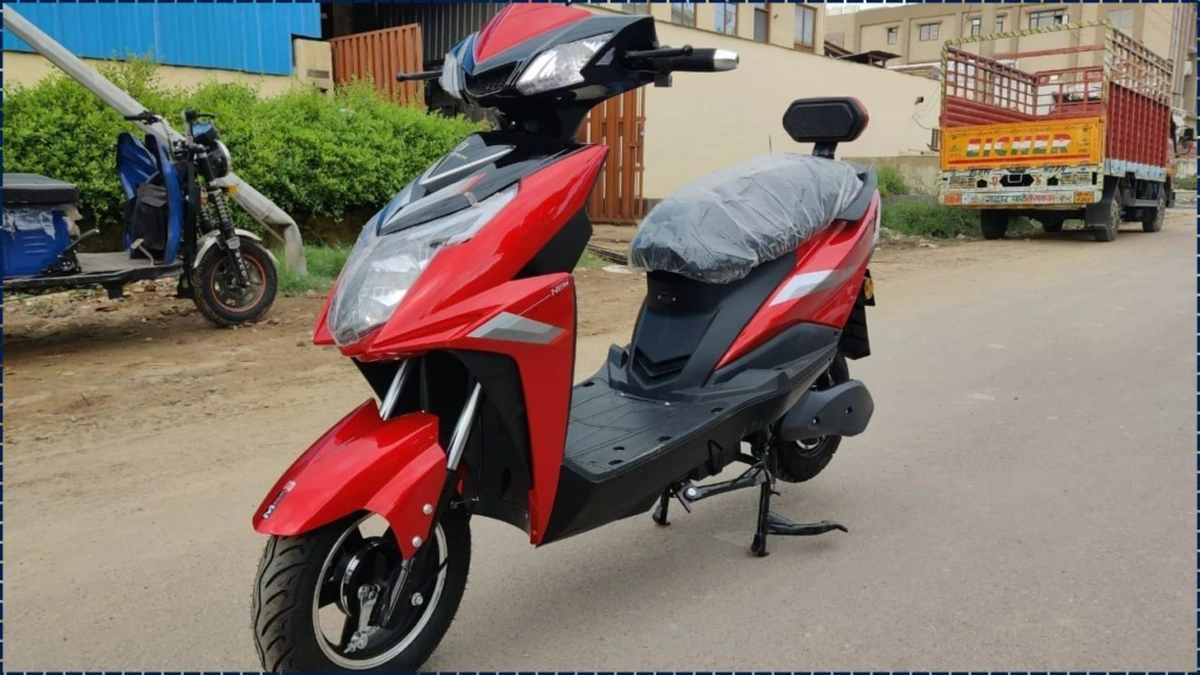
Supertech EV broadens its electric vehicle offerings with MAXX Autos and Zapster Scooters, backed by increased manufacturing capabilities, introductory deals, and favorable government policies. This initiative underscores India’s burgeoning EV sector and the country’s dedication to cleaner transportation solutions.
Supertech EV, an emerging force in India’s electric vehicle market, has enhanced its product line with the introduction of MAXX Autos and Zapster Scooters. This launch signifies a calculated effort to reinforce its position in India’s swiftly expanding EV market for both two- and three-wheeled vehicles. The company also unveiled special savings programs and financing options, intending to lower the barriers to EV ownership for businesses and individual consumers.
Table of Contents
- A Bold Bet on Affordable EV Mobility
- Manufacturing Expansion to Support Scale
- Competitive Pricing and Financing Incentives
- How Government Policy Is Boosting EV Growth
- Battery Technology and Safety Features
- Meeting Urban and Rural Mobility Needs
- EV Adoption and India’s Climate Goals
- India’s Position in the Global EV Transition
- Supertech’s Future Roadmap
- Outlook
A Bold Bet on Affordable EV Mobility
The primary keyword, Supertech MAXX Autos, highlights the company’s drive to satisfy the growing demand in the electric passenger and logistics vehicle sectors. The newly introduced Passenger MAXX and Cargo MAXX models boast a range of up to 140 kilometers on a single charge, reaching a maximum speed of 45 km/h.
The Zapster and Zapster Pro scooters are designed for urban commuters and fleet operators, offering speeds of up to 65 km/h and the advantage of removable lithium-ion batteries. This key feature empowers users to conveniently charge their batteries at home or at strategically placed charging stations.
“We are convinced that electric is the future of transportation in India,” stated Anil Mehra, Managing Director of Supertech EV. “With MAXX and Zapster, we deliver dependable, efficient, and cost-effective solutions tailored to India’s specific transportation needs.”
Manufacturing Expansion to Support Scale
Supertech EV has inaugurated a new manufacturing facility in Bahadurgarh, Haryana, featuring an annual production capacity of 36,500 units. This facility will be dedicated to assembling both two- and three-wheeled EVs, allowing Supertech to expand its operations and reduce delivery lead times.
According to the Society of Manufacturers of Electric Vehicles (SMEV), India’s EV market achieved 1.4 million units in FY 2024–25, demonstrating a substantial 42% increase compared to the previous year. Three-wheelers and scooters constitute nearly 75% of these sales.
“Local production is essential to India’s EV strategy,” commented Dr. Arjun Sen, a transport economist at the Indian Institute of Technology (IIT) Delhi. “Companies such as Supertech are vital in promoting domestic manufacturing and lessening reliance on imported components.”
Competitive Pricing and Financing Incentives
To stimulate early adoption, Supertech is providing launch discounts, appealing low-interest financing solutions, and lease-to-own opportunities via collaborations with partner NBFCs (Non-Banking Financial Companies). While the exact discount figures remain undisclosed, the company confirmed that buyers can access customized payment schedules and flexible repayment terms.
Industry analysts suggest that a competitive pricing structure will be crucial. Established players like Ola Electric, Euler Motors, and Mahindra Electric currently dominate the mid-range market. By delivering a competitive total cost of ownership, Supertech intends to capture market share in both rural and urban areas across India.
How Government Policy Is Boosting EV Growth
India’s Faster Adoption and Manufacturing of Hybrid and Electric Vehicles (FAME II) initiative offers financial assistance to both manufacturers and consumers. Purchasers of electric three-wheelers and scooters can receive incentives ranging from ₹15,000 to ₹50,000, based on battery capacity.
Numerous states, including Delhi, Maharashtra, and Tamil Nadu, extend additional incentives at the state level, encompassing exemptions from road tax and bonus offers for scrapping old vehicles. The Union Ministry of Heavy Industries has also announced standards for battery-swapping interoperability, potentially benefiting businesses that offer removable battery systems, such as Zapster.
“Policy predictability and attractive financial incentives have been key drivers of EV adoption,” noted Kavita Sharma, a Senior Analyst at the Centre for Policy Research (CPR). “Manufacturers that effectively integrate their products with these policy frameworks are best positioned to capitalize on the growth opportunities.”
Battery Technology and Safety Features
Supertech’s new product range incorporates 48V lithium-ion battery systems with an anticipated lifespan of up to 5 years. The batteries facilitate rapid charging in 4–5 hours and standard charging in approximately 6 hours.
The MAXX autos feature a differential rear axle system, improved suspension, and regenerative braking technology, enhancing both efficiency and safety. The scooters include anti-theft alarms, digital display dashboards, and mobile app connectivity for location tracking and maintenance notifications.
The company has sought Automotive Research Association of India (ARAI) certification, ensuring conformity with national safety benchmarks and performance regulations.
Meeting Urban and Rural Mobility Needs
Fleet operators and delivery startups are anticipated to be early adopters of the MAXX Cargo series. Supertech has launched pilot programs with e-commerce logistics providers in Delhi and Gurugram. The company is also targeting rural transportation providers that have historically relied on diesel-powered vehicles.
“Electric autos are less expensive to operate and simpler to maintain,” stated Rajesh Kumar, a last-mile delivery operator in Gurugram who participated in a Supertech pilot program. “Our fuel expenses have declined by almost 70%.”
The scooters are being marketed to college students, office workers, and gig economy participants. The company’s introductory financing plans are projected to stimulate demand in Tier 2 and Tier 3 cities.
EV Adoption and India’s Climate Goals
India is committed to achieving Net Zero emissions by 2070. The transportation sector contributes to 13% of the country’s greenhouse gas emissions, according to data from the Ministry of Environment, Forest and Climate Change. A swift transition to electric vehicles, specifically in the two- and three-wheeler categories, can yield significant results.
A BloombergNEF report forecasts that by 2030, 80% of India’s EV sales will be concentrated in these categories. With reduced operating costs, rapid charging times, and expanding infrastructure, vehicles like MAXX and Zapster have the potential to accelerate this transition.
India’s Position in the Global EV Transition
[IMAGE/CHART PLACEHOLDER: ALT TEXT: “Line graph comparing EV adoption trends in India, China, and Southeast Asia.”]
Description: A chart illustrating the trends in annual EV registrations across three important markets.
On a global scale, India ranks as the third-largest EV two-wheeler market, trailing only China and Vietnam. Analysts believe that India is strategically positioned to emerge as a manufacturing center for affordable EVs, contingent on the strengthening of battery supply chains.
“India is not competing with premium EV markets,” said Nidhi Batra, Asia Mobility Analyst at BloombergNEF. “Its advantage resides in scalable, affordable, and functional electric mobility – and businesses like Supertech are actively building in this domain.”
Supertech’s Future Roadmap
The company intends to invest ₹250 crore over the next three years in research and development, enhancements to their product line, and the expansion of their dealership network. They are also assessing export opportunities in countries like Nepal, Sri Lanka, and Bangladesh, where the demand for affordable EVs is increasing.
Supertech is currently in discussions with several private charging infrastructure companies to establish fast-charging stations at key urban locations and along major delivery routes. A company representative announced their intention to establish 1,000 charging points by 2027.
Outlook
Supertech’s broadening of MAXX Autos and Zapster Scooters mirrors a wider shift occurring within India’s transportation sector. By integrating local manufacturing, financial accessibility, and favorable government policies, the company is positioning itself to play a vital role in the country’s transition to electric mobility.
However, industry authorities warn that , , and continue to pose significant challenges. Successfully overcoming these challenges will determine how quickly EV adoption can extend beyond urban centers.
