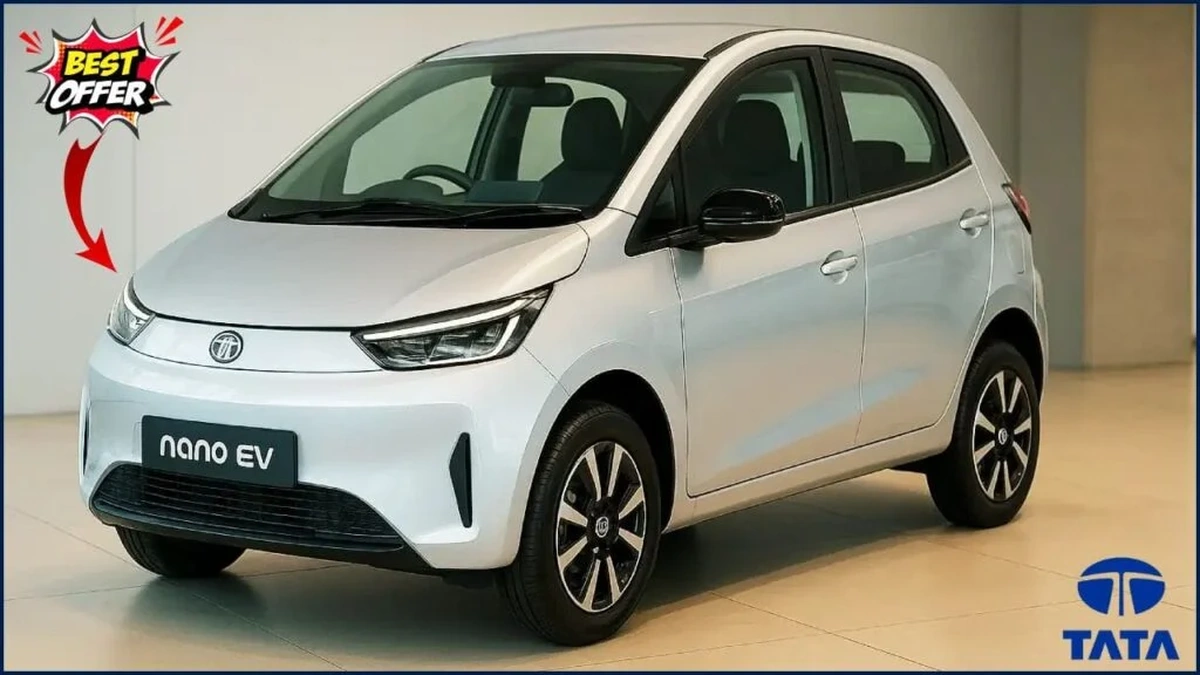
The much-discussed Tata Nano EV 2026 has sparked considerable interest among Indian consumers. Rumors circulating online suggest Tata might revive its once-iconic small car as an electric vehicle, boasting a 460 km driving range, rapid 35-minute charging, and an attractive EMI plan starting at ₹3,990 per month. However, Tata Motors has yet to officially confirm these specifications. This analysis delves into the veracity of these claims, examining them within the context of India’s rapidly evolving EV sector and assessing the potential impact of a Nano EV on affordable transportation.
Table of Contents
- The Legacy of the Nano
- Tata’s Broader Electric Strategy
- What the Viral Claims Suggest
- Assessing the 460 KM Range Claim
- Fast-Charging Reality: 35 Minutes or Marketing Myth?
- The EMI Question: Can ₹3,990 Per Month Be Realistic?
- Could the Nano EV Use Existing Technology?
- India’s EV Market in Transition
- Environmental and Social Impact
- What to Watch Next
- Balanced Expert Outlook
- Conclusion
The Legacy of the Nano
Launched in 2009 with the ambition of being “the world’s most affordable car,” the original Tata Nano aimed to democratize personal transportation for a vast segment of the population. Despite its initial buzz and cultural significance, sales fell short of expectations, leading to its discontinuation in 2018. A potential revival as an electric vehicle could signify both a symbolic comeback and a strategic advantage for Tata Motors, which currently dominates India’s EV market with models like the Nexon EV, Tiago EV, and Tigor EV.
Tata’s Broader Electric Strategy
As the leading EV manufacturer in India, Tata Motors commands approximately 70% of the domestic EV market, according to data from the Society of Indian Automobile Manufacturers (SIAM). The company has committed to investing around ₹350 billion (US $4 billion)
Tata is actively developing a cutting-edge Gen 3 EV architecture and increasing the localization of battery production through its subsidiary, Tata Agratas Energy Storage Solutions. This strategic approach underscores a long-term commitment to scaling EV production, although no project specifically branded as Nano has been formally announced.
What the Viral Claims Suggest
Unconfirmed reports on blogs and social media platforms suggest the forthcoming Tata Nano EV 2026 will offer:
- A range of 460 km on a single charge
- 35-minute rapid charging capabilities
- Affordable pricing with ₹3,990 monthly EMI options
While these assertions are appealing, they lack concrete evidence. Official sources from Tata Motors, including their EV website and recent financial disclosures, do not corroborate these specifications.
Assessing the 460 KM Range Claim
Achieving a 460 km range in a compact EV would likely require a battery capacity in the range of 40 to 45 kWh, assuming optimal energy efficiency. For context, the existing Tiago EV—a larger hatchback—provides a certified range of up to 315 km (ARAI-certified) using a 24 kWh battery pack. Automotive engineer Rohan Kumar points out:
“To achieve a 460 km range, a battery would have to be larger than is practical for a micro-car without significantly increasing its cost or weight.” This technical obstacle makes the rumored specification unlikely for a budget-friendly EV in the near future.
Fast-Charging Reality: 35 Minutes or Marketing Myth?
Current Tata EVs employ the CCS2 DC fast-charging standard. Typically, charging a Tiago EV from 10% to 80% with a 25 kWh battery takes about 57 minutes using a 50 kW charger. Reducing this charging time to 35 minutes would necessitate advanced solid-state or ultra-high-C-rate batteries, technologies still in the developmental phase. Energy-policy researcher Dr. Meera Nair observes:
“India’s charging infrastructure is growing, but even high-end EVs rarely consistently achieve 35-minute charging times due to thermal constraints and grid limitations.” Therefore, while it may be possible in future models, it is improbable that such technology would be incorporated into an ultra-low-cost EV by 2026.
The EMI Question: Can ₹3,990 Per Month Be Realistic?
If we assume a price of ₹6 lakh, an EMI of ₹3,990 would necessitate either a loan term of ten years or substantial manufacturer subsidies. Even accounting for government initiatives like FAME II and state-level incentives, analysts consider this figure overly optimistic. Financial analyst Priya Menon explains:
“To reach that EMI level, the final on-road price after incentives would need to be below ₹5 lakh — a challenging feat given the current costs of batteries.” This makes the pricing more of a marketing proposition than a realistic expectation.
From being mocked for the Nano to leading India’s EV revolution Tata Motors has pulled off one of the greatest comebacks in Indian corporate history.
Here’s how they went from “failure” to “future.” 👇#TataMotors #EVRevolution pic.twitter.com/IFvjm1wwUo
Could the Nano EV Use Existing Technology?
If a Nano EV is indeed launched, it would most likely leverage Tata’s Ziptron platform or its next-generation EV architecture. This would improve safety and battery management but would probably limit the range to around 200–250 km — similar to current entry-level EVs. Experts also suggest Tata could apply lessons learned from the Tiago EV and the Punch EV to scale down components for a smaller vehicle.
India’s EV Market in Transition
India saw over 1.5 million EV sales in 2024, marking a 40% increase compared to the previous year, according to the Ministry of Heavy Industries. While two-wheelers dominate sales, demand for smaller electric cars is increasing. Competitors like the MG Comet EV, Citroën ë-C3, and Maruti Suzuki’s forthcoming EV models are vying for the attention of budget-conscious urban drivers. A revived Nano EV could fit well into this segment, providing city-friendly transportation backed by Tata’s reliable network — contingent on the technical feasibility and accurate pricing of its features.
Environmental and Social Impact
An affordable Nano EV has the potential to transform urban mobility in India. Densely populated cities like Delhi and Bengaluru are struggling with high levels of air pollution and traffic congestion. Smaller EVs can lower tailpipe emissions and per capita energy consumption. Economist Arvind Kohli states:
“Affordable EVs align with India’s target of achieving net-zero emissions by 2050 and could reduce dependence on imported oil.” However, experts emphasize that electricity generation must also shift towards renewable sources to fully realize the environmental benefits.
What to Watch Next
Tata Motors typically presents new concept vehicles at the Auto Expo, which occurs biennially. Analysts predict that any Nano EV prototype – if one exists – will be showcased there or at an official investor presentation before the middle of 2026. Consumers should pay attention to:
- Official announcements regarding battery specifications and pricing
- Independent reviews of range performance by automotive publications
- Progress in the expansion of fast-charging infrastructure by Tata Power and other providers
Balanced Expert Outlook
Dr. Anya Sharma from the Brookings Institution summarizes:
“The Nano EV concept aligns with Tata’s vision of democratizing mobility. However, the technical claims circulating online need to be verified through official disclosures from the company and through independent testing.” This sentiment reflects a common view among industry analysts — cautious optimism.
Tata Nexon 2025 SUV with 1.2L Turbo Petrol & 40 KMPL Mileage: Massive Year End Offer on Bookings!
Conclusion
Currently, the Tata Nano EV 2026 remains a hypothetical project. There is no official confirmation to support the claims regarding a 460 km range or 35-minute fast charging. These figures seem inconsistent with current battery technology and cost structures for affordable EVs in India. Nevertheless, the Nano brand still has significant recognition. If reintroduced responsibly, it could make electric mobility more accessible to the broader market — an objective that aligns with India’s sustainability goals. For the time being, consumers should await credible details from Tata Motors before giving credence to these claims.
