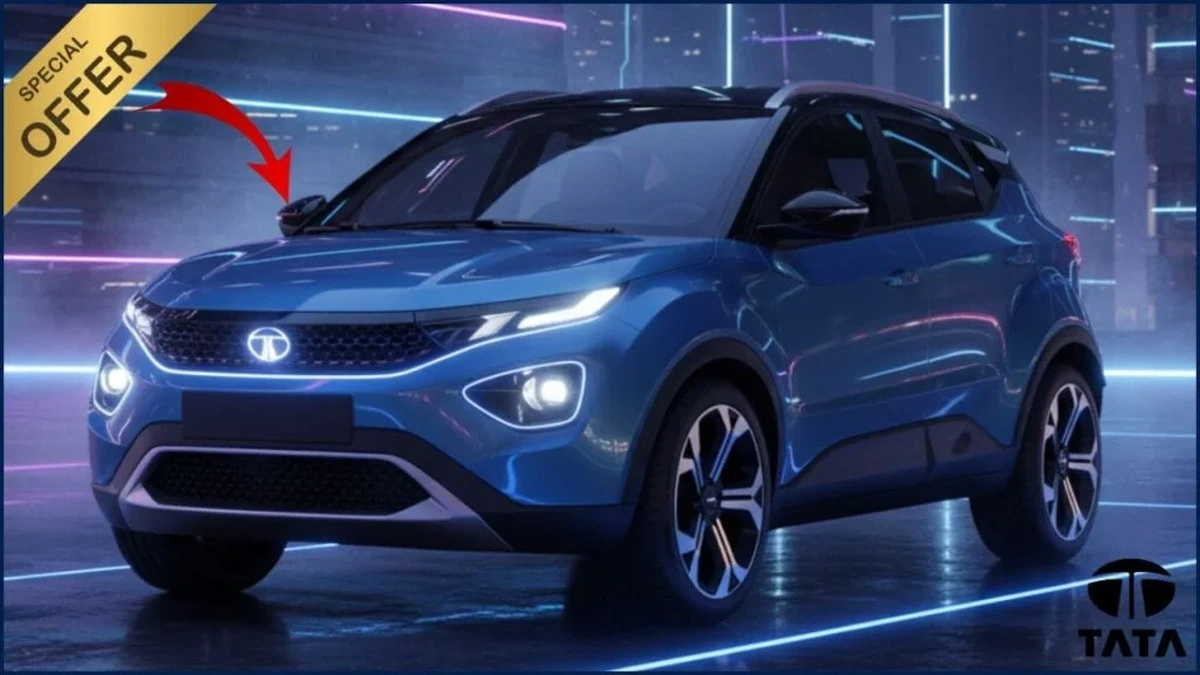
The Tata Nexon 2025 SUV maintains its strong position in the Indian compact SUV segment, but recent claims of a 40 KMPL mileage have drawn attention and some skepticism. While these figures remain unverified, experts emphasize that the 1.2L Turbo Petrol version typically achieves 17–18 kmpl. Nexon’s proven strengths lie in its safety features, advanced technology, and overall reliability.
The Tata Nexon 2025 SUV, a popular choice among Indian compact SUV buyers, has sparked debate due to online reports suggesting an impressive 40 KMPL mileage for certain models. Automotive experts are advising caution, referencing official data that presents a more realistic fuel consumption scenario.
Table of Contents
- A Compact SUV That Redefined a Segment
- Tata Nexon 2025 SUV: Engine and Performance
- Mileage Controversy: 40 KMPL Claim Under Review
- Market Performance and Competitor Landscape
- Tata Nexon 2025 Safety, Technology, and Driving Experience
- Consumer Perspectives and Year-End Offers
- Future Outlook: EV and Hybrid Expansion
- Expert Takeaway
- Conclusion
A Compact SUV That Redefined a Segment
Launched in 2017, the Tata Nexon rapidly reshaped the Indian compact SUV market, offering a compelling combination of stylish design, robust safety, and affordable pricing. Notably, it became the first Indian-made vehicle to secure a five-star Global NCAP safety rating, setting a new safety standard for its category.
The 2025 model builds upon this foundation with subtle design improvements, enhanced aerodynamics, a redesigned front, and modern LED lighting. The interior features a 10.25-inch touchscreen infotainment system, a digital instrument panel, wireless charging capabilities, and a convenient 360-degree camera system.
Tata Motors states that this model targets “urban professionals and families seeking a vehicle that delivers strong performance without sacrificing safety or comfort.”
Tata Nexon 2025 SUV: Engine and Performance
Powering the Tata Nexon 2025 SUV is the 1.2L Turbo Petrol Revotron engine, delivering approximately 118 bhp and 170 Nm of torque. A 1.5L diesel variant is also available, producing 260 Nm of torque.
Transmission options include a six-speed manual, an AMT (Automated Manual Transmission), and a seven-speed dual-clutch automatic (DCA). The DCA version, introduced in 2023, has been praised for its smooth shifts and improved performance on highways.
Tata confirms that its engines are compliant with BS6 Phase-II emission standards, adhering to India’s stricter environmental regulations.
Mileage Controversy: 40 KMPL Claim Under Review
Claims of the Tata Nexon 2025 SUV achieving 40 KMPL mileage have been widely shared on social media and various online platforms. This reported figure has generated considerable interest and debate among potential buyers.
However, the Automotive Research Association of India (ARAI) indicates that the official fuel efficiency for the 1.2L Turbo Petrol model ranges from 17.44 to 18.05 kmpl, depending on the specific transmission. The diesel version is reported to achieve up to 24.08 kmpl.
Automotive journalist Ramesh Menon from Autocar India commented, “Extremely high mileage figures often result from controlled or manipulated testing environments. Consumers should prioritize ARAI-certified figures and independent, real-world road tests.”
Tata Motors has not officially supported the 40 kmpl claim. A company spokesperson informed The Hindu Business Line that “all mileage data published by Tata Motors are based on ARAI certification and our rigorous internal testing procedures.”
Market Performance and Competitor Landscape
The Tata Nexon 2025 SUV faces competition from models such as the Hyundai Venue, Maruti Suzuki Brezza, Kia Sonet, and Mahindra XUV300. The Nexon is particularly recognized for its sturdy construction and strong safety record.
According to market research firm JATO Dynamics, Nexon models represented over 14 percent of compact SUV sales in India during the third quarter of 2025. The report emphasizes Tata’s extensive domestic manufacturing capabilities as a significant factor in its success.
The Hyundai Venue and Kia Sonet maintain a slight advantage in urban areas due to their comprehensive feature sets and fuel efficiency, averaging around 18–20 kmpl for their petrol variants.
Tata Nexon 2025 Safety, Technology, and Driving Experience
Safety is a key aspect of the Nexon. The Tata Nexon 2025 SUV includes six airbags, Electronic Stability Control (ESC), Hill-Hold Assist, and an advanced traction control system.
Experts see the 2025 model as progressing towards semi-autonomous driving. Top-tier versions incorporate Advanced Driver Assistance Systems (ADAS), including Forward Collision Warning, Lane Departure Alerts, and Blind-Spot Monitoring.
Dr. Neeraj Kapoor, an automotive engineer at the Indian Institute of Technology (IIT) Delhi, observed:
“The updated Nexon reflects Tata’s enhanced engineering expertise. While its fuel efficiency aligns with others in its class, its structural integrity and electronic safety systems are among the best available under ₹15 lakh.”
Consumer Perspectives and Year-End Offers
Dealerships in major Indian cities are reporting robust demand at the end of the year. Discounts are reportedly available, ranging from ₹25,000 to ₹65,000 on select models, accompanied by extended warranty options and insurance packages.
A buyer from Bengaluru, Anjali Nair, stated, “I chose the Nexon after comparing it to the Brezza and Venue. The year-end promotion and updated design were appealing, but I confirmed the actual mileage details with the dealer.”
Rajesh Iyer, a senior sales consultant at a Tata dealership in Mumbai, noted, “The 40 kmpl claim initially created confusion for some customers. However, after clarifying the accurate figures, many still opt for the Nexon due to its safety features and reliability.”
Future Outlook: EV and Hybrid Expansion
Tata Motors is committed to expanding the electric options in its SUV lineup. The company plans to introduce a Nexon EV facelift that provides an extended range of up to 465 km on a single charge, utilizing its Ziptron technology platform.
Tata aims for electric vehicles to constitute 25 percent of its passenger car sales by 2030. The Nexon, already a popular electric vehicle in India, will be instrumental in achieving this goal.
Expert Takeaway
The Tata Nexon 2025 SUV excels based on credible aspects—safety, performance, and overall trust.
Sonia Kulkarni, an automotive analyst at CRISIL, remarked,
“Today’s consumers are better informed. They prioritize verified safety ratings, build quality, and reliable after-sales service as much as fuel efficiency.”
Toyota Land Cruiser 2025 with Hybrid Power & Bold Design: Huge Festive Offer Announced!
Conclusion
The continues to be one of India’s most reliable and sought-after compact SUVs. While the supposed claim appears unsubstantiated, the vehicle maintains its appeal through technology, safety features, and overall value. As the Indian automotive market continues to evolve, the Nexon’s advancements showcase the country’s transition toward smarter, safer, and more sustainable transportation options.
