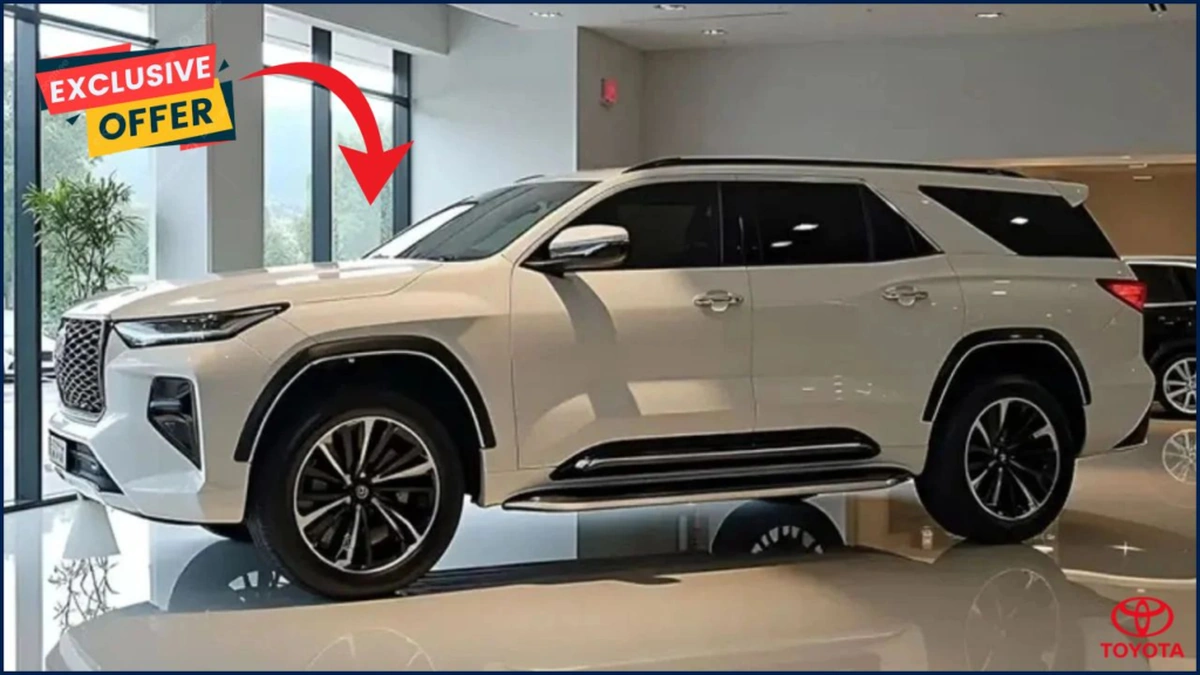
Recent buzz surrounds the Toyota Fortuner 2025, a leading diesel SUV in India, with reports circulating about exceptional 30 km/l mileage and significant price reductions. However, official figures indicate a more realistic fuel efficiency of around 14 km/l, and available discounts are more restrained. This underscores Toyota’s dedication to dependable performance over exaggerated promotional claims.
The Toyota Fortuner 2025 has garnered significant attention in India following widespread claims of substantial discounts and an impressive 30 km/l fuel efficiency for its diesel variant. However, substantiated information from Toyota and authoritative automotive sources suggests these assertions are inflated. A closer look reveals the distinction between factual data and marketing embellishments.
Table of Contents
- The Toyota Fortuner 2025: A Benchmark in the Premium SUV Segment
- Debunking the 30 km/l Mileage Claim
- Discounts and Offers: Facts Behind the Headlines
- Market Dynamics: The Fortuner’s Dominance and Its Challenges
- Design and Interior Upgrades
- Toyota’s Broader Strategy in India
- Consumer Advice: Verifying Claims Before Purchase
- The Bottom Line
The Toyota Fortuner 2025: A Benchmark in the Premium SUV Segment
The Toyota Fortuner 2025 continues to be a highly desirable full-size SUV in the Indian market. Toyota has maintained a strong presence in the SUV market due to the model’s reliable nature and robust build.
The latest version maintains the 2.8-litre, four-cylinder turbocharged diesel engine, which delivers 204 PS of power and up to 500 Nm of torque, coupled with either a six-speed manual or automatic transmission. The SUV still utilizes a body-on-frame construction, which enhances both off-road capability and comfort during long journeys.
According to Toyota Kirloskar Motor (TKM), the company’s Indian division, the price range for the 2025 Fortuner begins at about ₹36.05 lakh (ex-showroom, Delhi) and exceeds ₹52 lakh for the Legender and GR-Sport models.
Debunking the 30 km/l Mileage Claim
The claim that the Fortuner 2025 achieves 30 km/l has been widely shared on social media and online platforms. However, official mileage figures present a different reality.
Data certified by the Automotive Research Association of India (ARAI) indicates that the Fortuner diesel automatic provides between 10 and 14.2 km/l, varying based on the specific model and driving conditions. Even the most efficient configurations fall significantly short of the 20 km/l mark.
Rohit Bhatia, a senior engineer at the Indian Automobile Research Council, commented:
“Achieving 30 km/l is highly unlikely for a ladder-frame SUV weighing over two tonnes. Such numbers are generally seen with compact hybrid vehicles, not large diesel SUVs.”
While Toyota is globally investing in hybrid and hydrogen technologies, the Fortuner sold in India still relies on traditional diesel engines. There are no confirmed plans to introduce a hybrid or electric version of the Fortuner in India before 2026.
Discounts and Offers: Facts Behind the Headlines
Reports from CarWale, GaadiWaadi, and CarOnPhone have highlighted dealer-specific promotions on the Fortuner, with potential savings of up to ₹1.30 lakh. These incentives include exchange bonuses, loyalty benefits, and time-limited corporate discounts.
However, Toyota India has not launched any nationwide, factory-supported discount programs. Instead, dealerships independently adjust prices based on local stock levels and consumer demand.
Anita Menon, a senior sales executive at a Toyota dealership in Mumbai, clarified:
“The Fortuner continues to be in high demand. While we occasionally offer minor exchange or loyalty bonuses, there are no substantial discounts being offered as suggested in some posts.”
Therefore, the term “massive discount” is relative; a ₹1 lakh reduction on a ₹45 lakh vehicle amounts to a modest 2–3 percent decrease. In comparison, competitors like the MG Gloster have offered cash benefits exceeding ₹3 lakh during the same period, according to dealer sources.
Market Dynamics: The Fortuner’s Dominance and Its Challenges
The Fortuner holds a distinct position in the Indian SUV market. Despite the emergence of newer competitors such as the Hyundai Tucson, Jeep Meridian, and Skoda Kodiaq, it maintains approximately 70 percent of the market share in the ₹35–50 lakh SUV category, based on data from the Society of Indian Automobile Manufacturers (SIAM).
Toyota’s consistent sales are attributed to a combination of reliability, dependable after-sales support, and strong resale value. The Fortuner’s off-road capabilities, ladder-frame chassis, and 4×4 system make it particularly appealing to government officials, business owners, and buyers in rural areas who value durability over fuel efficiency.
However, industry analysts note that Toyota’s pricing strategy presents opportunities for new entrants. Shailesh Chandran, an automotive analyst at Frost & Sullivan, stated:
“Toyota’s primary challenge is striking a balance between exclusivity and affordability. Competitors are providing more technologically advanced SUVs with improved ride quality and efficiency at more competitive prices.”
Design and Interior Upgrades
The 2025 Fortuner retains its striking exterior design, featuring LED projector headlamps, a distinctive grille, and robust wheel arches. The interior includes perforated leather upholstery, ventilated seats, a 9-inch touchscreen infotainment system, and a premium 11-speaker JBL audio system on higher-end models.
While these enhancements improve its luxurious appeal, some critics have noted the absence of features like a panoramic sunroof and advanced driver-assistance systems (ADAS), which are becoming increasingly standard in newer SUVs such as the Tata Harrier EV and the MG Gloster Facelift.
Auto analyst Richa Khurana of Autocar India observed:
“Toyota has favored incremental improvements over radical changes. While the Fortuner’s mechanical components are top-notch, it may appear outdated compared to competitors emphasizing high-tech interiors.”
Toyota’s Broader Strategy in India
The Fortuner’s success supports Toyota’s broader initiative to promote hybrid technology in India. The company’s local lineup now includes the Urban Cruiser Hyryder and Innova Hycross, both offering strong-hybrid options that greatly enhance fuel efficiency.
However, Toyota has indicated no immediate plans to electrify the Fortuner. The company believes that large diesel SUVs still cater to a specific market segment that prioritizes power, towing capacity, and long-distance reliability.
Vikram Kirloskar, Vice Chairman of Toyota Kirloskar Motor, stated in a previous media briefing:
“Our strategy for the Fortuner line focuses on stability and dependability. Electrification will be introduced when we can ensure both performance parity and cost-effectiveness for our customers.”
Consumer Advice: Verifying Claims Before Purchase
Automotive experts advise caution when assessing viral claims regarding performance or discounts. Siddharth Sharma, a senior journalist at Overdrive, pointed out:
“Buyers should always confirm mileage and pricing details with official Toyota dealerships or the company’s website. Online posts often combine outdated information with speculation to attract views.”
Potential buyers are encouraged to review documents from the Bureau of Indian Standards (BIS) and the Automotive Research Association of India (ARAI) for verified vehicle data. Consumers can also check Toyota’s official press releases and the Toyota India website for accurate information on model specifications and available offers.
The Bottom Line
The Toyota Fortuner 2025 continues to represent power, luxury, and reliability in the Indian SUV market. However, claims of a 30 km/l diesel efficiency and substantial discounts are not supported by factual evidence. Verified data indicates a fuel efficiency closer to 14 km/l, with only modest incentives offered by individual dealerships.
As the automotive market evolves towards hybrid and electric drivetrains, the Fortuner remains a significant presence. However, its continued success will depend on Toyota’s ability to adapt to a more sustainability-conscious consumer base.
