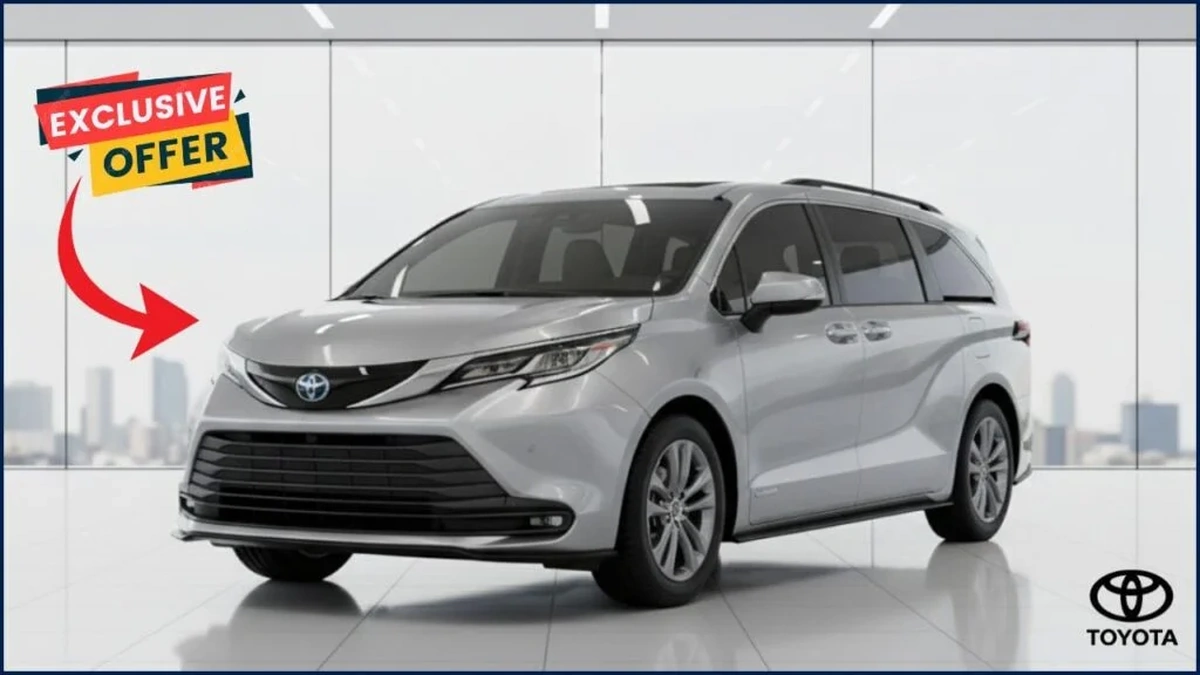
The Toyota Sienna 2025, a luxurious seven-seat hybrid MPV, marks Toyota’s latest advancement in its global electrification strategy. Boasting a fuel-efficient 36 miles per gallon (MPG) hybrid system and a suite of smart technologies, this model elegantly merges practicality, comfort, and environmental responsibility, catering to the needs of modern families.
Table of Contents
- A Refined Hybrid Platform for Modern Families
- Toyota Sienna 2025 Design and Comfort: Functionality Meets Elegance
- Smart Technology and Advanced Safety Systems
- Fuel Efficiency and Environmental Goals
- Global Market Outlook and Regional Potential
- Introductory Offers and Pricing
- Expert Insights: Toyota’s Hybrid Strategy in Context
- Consumer Considerations and Ownership Factors
- Challenges and Market Risks
- Conclusion
A Refined Hybrid Platform for Modern Families
The 2025 Sienna utilizes Toyota’s advanced hybrid system, featuring a 2.5-liter four-cylinder gasoline engine coupled with two electric motors. This combination delivers around 245 horsepower, ensuring a balanced performance with excellent fuel economy.
The front-wheel-drive (FWD) model achieves approximately 36 MPG combined, while the all-wheel-drive (AWD) variant has slightly lower numbers due to its enhanced traction. Despite its generous size, the Sienna provides smooth acceleration and stable handling, thanks to Toyota’s New Global Architecture (TNGA-K) platform, which enhances structural integrity and ride quality.
Built for the journey, not just the destination. The 2025 #Toyota #Sienna turns everyday drives into memory-makers—especially with a co-pilot like this. pic.twitter.com/HtoQAOy5rc
Toyota Sienna 2025 Design and Comfort: Functionality Meets Elegance
Aesthetically, the Sienna 2025 enhances the sculpted and dynamic design of its predecessor. The front showcases sleek LED headlights and a broad lower grille, drawing inspiration from Japanese bullet trains, thus honoring Toyota’s design legacy.
The interior emphasizes both luxury and user-friendliness. The seven-seat configuration includes second-row captain’s chairs with leg rests, offering exceptional comfort for long trips. Premium trims include features like ventilated seats, a panoramic sunroof, and premium leather seating.
The center console features a new 12.3-inch multimedia touchscreen that supports Apple CarPlay and Android Auto, alongside a digital driver display providing real-time hybrid system data. Multiple USB ports, wireless charging, and tri-zone automatic climate control are standard in most models.
Smart Technology and Advanced Safety Systems
The Sienna 2025 is equipped with Toyota Safety Sense 3.0, the latest in active safety and driver-assistance technology. This suite includes adaptive cruise control, lane-keeping assist, blind-spot monitoring, rear cross-traffic alert, and pre-collision detection with pedestrian recognition.
A notable addition is a radar-based rear-seat reminder, detecting movement or heat in the rear seats to prevent children or pets from being left behind, demonstrating Toyota’s commitment to human-centered safety.
Higher trims also offer over-the-air (OTA) update capabilities, allowing for remote software updates. Cloud-based navigation, digital key access via smartphone, and voice-activated commands further enhance convenience for tech-savvy users.
Fuel Efficiency and Environmental Goals
Achieving 36 MPG combined, the Toyota Sienna 2025 ranks as one of the most efficient large MPVs on the market. Toyota estimates its hybrid system reduces carbon emissions by about 25 percent compared to conventional gasoline minivans.
For urban drivers, the hybrid system alleviates range concerns associated with electric vehicles while significantly reducing fuel expenses. The regenerative braking system captures energy during deceleration, storing it in a nickel-metal hydride battery for later use during acceleration.
This strategy supports Toyota’s wider environmental goal of achieving carbon neutrality by 2050 through a mix of hybrid, plug-in hybrid, hydrogen fuel cell, and all-electric vehicles.
Global Market Outlook and Regional Potential
The Toyota Sienna 2025 primarily targets the North American and Asian markets, where demand for spacious, fuel-efficient family vehicles is consistently high. In the U.S., the Sienna is typically among the top three minivans in sales, competing with rivals like the Honda Odyssey and Chrysler Pacifica.
In Asian markets, such as India, Thailand, and the Middle East, Toyota may consider local assembly to lower costs and benefit from government incentives for hybrid technology.
Introductory Offers and Pricing
Globally, Toyota has suggested a limited-time introductory offer to attract early adopters.
In the U.S., the base price for the Sienna 2025 is expected to start around USD 40,000, with higher trim levels exceeding USD 55,000. Prices in right-hand-drive markets like Japan or Singapore will vary due to import duties and local taxes. If imported to India as a completely built unit (CBU), the estimated price could range from ₹65 lakh to ₹80 lakh, depending on configuration and taxation.
Expert Insights: Toyota’s Hybrid Strategy in Context
Industry experts see the Sienna 2025 as a reflection of Toyota’s continued faith in hybrid technology, even as other automakers increasingly focus on battery-electric vehicles (EVs).
Dr. Rajesh Nair, a transportation researcher in Chennai, notes:
“The Sienna 2025 exemplifies Toyota’s practical approach to electrification. It acts as a bridge between traditional fuel systems and full EVs, especially in regions where charging infrastructure is still developing.”
Similarly, international analysts point out that the model’s combination of practicality and low operating costs aligns with Toyota’s broader business strategy. The brand’s hybrid models have historically maintained strong resale values and lower maintenance expenses, further building consumer confidence.
Consumer Considerations and Ownership Factors
For potential buyers, the Sienna 2025 offers a mix of practicality and a premium experience. The hybrid system does not require external charging, which is ideal for households with limited access to EV charging.
Maintenance costs are anticipated to be reasonable, reflecting Toyota’s reputation for hybrid reliability. The high-voltage battery is usually covered by extended warranties, often up to eight years or 160,000 kilometers. The MPV’s spacious interior, flat floor, and adaptable seating make it well-suited for large families or chauffeured transport.
Key considerations before buying include:
- Performance: Expect smooth, linear acceleration and a quiet interior, rather than sporty handling.
- Ownership cost: Significant fuel savings compared to traditional gasoline MPVs over the long term.
- Service network: Toyota offers widespread service availability.
- Resale value: Historically strong for Toyota hybrids, thanks to their reliability and brand reputation.
Challenges and Market Risks
Despite its strengths, the Sienna 2025 faces certain hurdles. The global MPV segment has been shrinking as consumers increasingly prefer sport-utility vehicles (SUVs). Therefore, the model’s success will depend on persuading buyers of its superior comfort, utility, and fuel efficiency.
Toyota Fortuner 2025 priced at ₹3.49 Lakh with 30kmpl mileage and dhamaka offers in a massive discount sale
Conclusion
The Toyota Sienna 2025 represents the evolution of the modern MPV: intelligent, efficient, and designed for families. Its 36 MPG hybrid powertrain, luxurious interior, and integrated smart-tech ecosystem establish it as a leader in sustainable mobility.
As Toyota balances innovation with dependability, the Sienna exemplifies how hybrid vehicles continue to be a practical and environmentally conscious choice, bridging the gap between today’s transportation and the electrified future.
