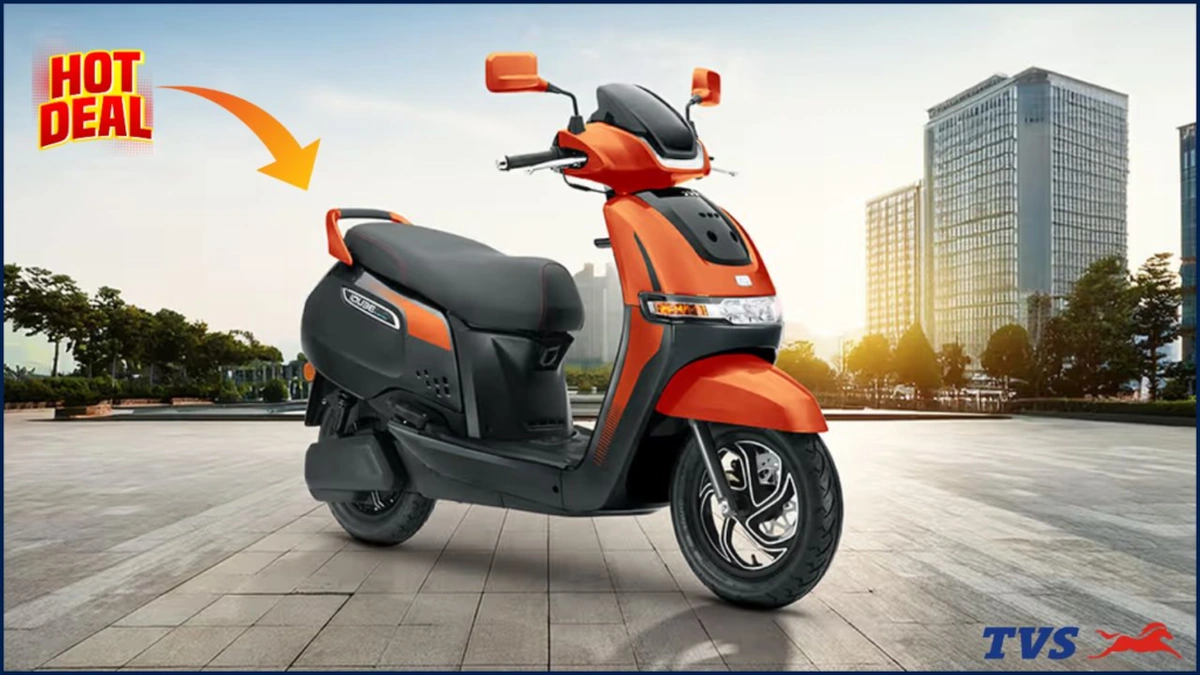
News is circulating about a possible budget variant of the TVS iQube, offering a claimed range of 180 km, along with a substantial ₹20,000 discount during the festive season, based on insights from dealer networks and social media discussions. While TVS Motor Company has yet to make a formal announcement, industry analysts suggest this strategic move aligns with the rapidly expanding electric mobility sector in India, especially leading up to the peak sales period.
Table of Contents
- Festive Buzz Around a New TVS iQube Variant
- India’s EV Market Context and Competitive Pressure
- Dealer Indications vs Official Silence
- Technical and Economic Considerations
- Battery Technology and Charging Infrastructure
- Consumer Financing and Ownership Costs
- Festive Sales and Consumer Sentiment
- Consumer Perspectives and Early Reactions
- Regulatory Landscape and Subsidy Updates
- What Happens Next
Festive Buzz Around a New TVS iQube Variant
Rumors suggest the potential launch of a more affordable version with an improved range. If true, this would represent the first significant addition to the iQube product line following the company’s earlier enhancements to battery capacity in early 2024.
Currently, the premium iQube model boasts a 5.3 kWh battery, delivering an IDC (Indian Driving Cycle) certified range of up to 212 km, as per official data from TVS Motor Company. The speculated model, with its 180 km range, is likely positioned between the high-end and base variants, the latter offering approximately 100 km.
In the Indian two-wheeler market, it’s common practice to employ festive season promotions. Dealers often share discounts or preliminary details weeks before the official announcements to stimulate consumer interest.
India’s EV Market Context and Competitive Pressure
The electric two-wheeler market in India has seen significant expansion in recent years. A combination of increased fuel costs, government subsidies (both central and state), and a growing consumer preference for electric vehicles has driven EV sales to unprecedented levels.
Based on information from the Society of Manufacturers of Electric Vehicles (SMEV)
TVS Motor Company is a key player in this market, competing mainly with Ola Electric, Ather Energy, and Hero MotoCorp. Models like Ola’s S1 Air and Ather’s 450S have focused on a balance of range and cost-effectiveness. A mid-range iQube variant could be seen as TVS’s response to these market dynamics.
“TVS has established a solid reputation for dependability and after-sales support,” noted Dr. Meera Narang, an automotive industry analyst at the Centre for Mobility Research (CMR). “By introducing a budget-conscious model with a substantial range, the company has the potential to solidify its presence in Tier 2 and Tier 3 cities, where affordability is a major consideration.”
Dealer Indications vs Official Silence
Despite the absence of an official statement from TVS Motor Company, several dealers in regions such as Uttarakhand, Uttar Pradesh, and Maharashtra have hinted at a promotional offer of ₹20,000
However, industry analysts recommend careful assessment. “Dealers often get advanced information regarding upcoming promotions; however, not all details are always accurate,” stated Arun Dev, Senior Editor at EV Tech India. “Until TVS releases a formal statement, this information should be regarded as a potential, though unconfirmed, development.”
TVS has a history of using festive promotions strategically. In both 2023 and 2024, the company implemented limited-time cashback deals and exchange incentives, which led to noticeable sales increases.
Technical and Economic Considerations
The existing iQube range includes battery options of 2.2 kWh, 3.1 kWh, 3.5 kWh, and 5.3 kWh. A new variant with a 180 km range would likely necessitate a battery capacity between 4.0 and 4.5 kWh, depending on the weight, efficiency, and power delivery of the scooter.
This market segment is particularly appealing as it allows manufacturers to offer extended range at a more accessible price point compared to premium models, without sacrificing essential performance. For a large number of urban and semi-urban commuters, a 180 km range provides sufficient coverage for a week’s worth of travel on a single charge.
Experts suggest that this model could also bring the on-road price down from the top-tier variant, making it more attractive to middle-income consumers. The combination of range, price, and brand reputation could position this scooter as a strong contender against Ola S1 Air and Ather 450S.
“Mid-range models often provide the best overall value,” stated Kunal Menon, founder of EV Research India. “Customers in this segment are seeking dependability, sufficient range, and low running costs, rather than purely top-tier performance.”
Battery Technology and Charging Infrastructure
While pricing is a significant factor, battery technology and the availability of charging infrastructure are equally important for the wider adoption of EVs in India. TVS utilizes lithium-ion battery packs with integrated battery management systems, designed for longevity and safety.
Charging infrastructure in India has seen significant improvement in the last couple of years. The Ministry of Heavy Industries reports that over 10,000 public EV charging stations are now operational across the country, a substantial increase from the 1,000 available in 2022. TVS iQube scooters are compatible with both home charging solutions and selected public fast chargers.
Analysts point out that a 180 km range could make longer trips between cities more practical, particularly in states like Maharashtra, Karnataka, and Tamil Nadu, where charging points are more readily available.
Consumer Financing and Ownership Costs
Another element promoting EV adoption is the overall cost of ownership. Although the initial cost of electric scooters is often higher compared to petrol scooters, the running costs are significantly lower. According to estimates by the Bureau of Energy Efficiency (BEE), the cost per kilometer for an electric scooter in India is less than a third of that for a petrol scooter.
Financing solutions have also become more accessible. Several major banks and NBFCs now provide specialized EV loan products with reduced interest rates. TVS’s financial arm also offers flexible EMI plans, which could extend to the new speculated model.
“Financing is critical in boosting EV adoption,” said Saurabh Patel, Head of Retail Financing at a major private bank. “We’re observing strong interest in two-wheeler EV loans in semi-urban locations, particularly during festival periods.”
Festive Sales and Consumer Sentiment
The current festive periods are traditionally peak sales times for two-wheelers in India. According to the Society of Indian Automobile Manufacturers (SIAM), approximately 20% to 30% of annual two-wheeler sales happen during these festive months. Many buyers time their purchases to coincide with auspicious dates, available discounts, and appealing financing offers.
Consumer Perspectives and Early Reactions
Consumers generally show enthusiasm regarding the potential for a reasonably priced, long-range electric scooter. Numerous users on EV online forums and Facebook groups have indicated strong interest in the potential model, citing range and price as deciding factors.
“I’ve wanted to buy an electric scooter, but the higher-end iQube is slightly beyond what I can afford,” stated Sunita R., a schoolteacher from Dehradun. “If the 180 km model is priced lower, it could be ideal for my daily transport.”
However, experts caution that the actual range can vary based on driving habits, road conditions, load weight, and temperature. Consumers are advised to consult official specifications and conduct test rides before making a decision, rather than solely relying on marketing claims.
Regulatory Landscape and Subsidy Updates
The Indian government’s FAME-II initiative has been a significant factor in facilitating EV adoption. Even though the subsidy amount per kWh of battery was lowered in 2024, various state governments continue to offer additional incentives. For instance, states like Maharashtra and Gujarat provide extra subsidies and road tax exemptions for electric two-wheelers.
Industry experts believe that any new TVS iQube model would be strategically priced to leverage these incentives, ensuring the final on-road price remains competitive.
“Pricing EVs strategically to fall under subsidy thresholds has become a key strategy for manufacturers,” explained Dr. Narang. “A 180 km variant could perfectly match requirements for mass adoption.”
Tata Tiago 2025 with 33 km/l Mileage and Modern Design: Huge Discount Starting at ₹4.57 Lakh
What Happens Next
Currently, the rumored TVS iQube 180 km range model and any potential discounts remain unconfirmed
Industry insiders believe TVS will likely use a blend of dealer promotions, digital marketing campaigns, and attractive EMI schemes to encourage festive season sales. Should the new variant materialize, it could further escalate competition within the electric scooter market in India.
“It is vital for customers to confirm information directly with authorized dealers or the official TVS website,” stated Anupama Verma, a consumer rights advocate. “Rumors can generate expectations, but final decisions must be based on verified information.”
